The thermometer was the gatekeeper. You knew this. Every kid knew this. You'd hold it against the lightbulb on your bedside lamp for exactly the right amount of time - not too long, because 107 degrees was going to raise questions - and then present it to your mom with the most pitiful face you could manage. Bonus points if you could do that thing where your eyes went slightly glassy. Extra bonus points if you'd been coughing performatively since 6 AM.
Sometimes you didn't even need the thermometer trick. Sometimes you just needed the voice. That scratchy, half-whispered "I don't feel good" delivered from the doorway of the kitchen while your mom was packing lunches. The timing had to be right. Too early and she'd tell you to go back to bed and see how you felt in an hour. Too late and you were already dressed, which meant you'd lost the negotiation before it started.
But when it worked - when she put her hand on your forehead and did that little frown and said "You do feel warm" - the relief was almost spiritual.
You were staying home.
The Kingdom of the Couch
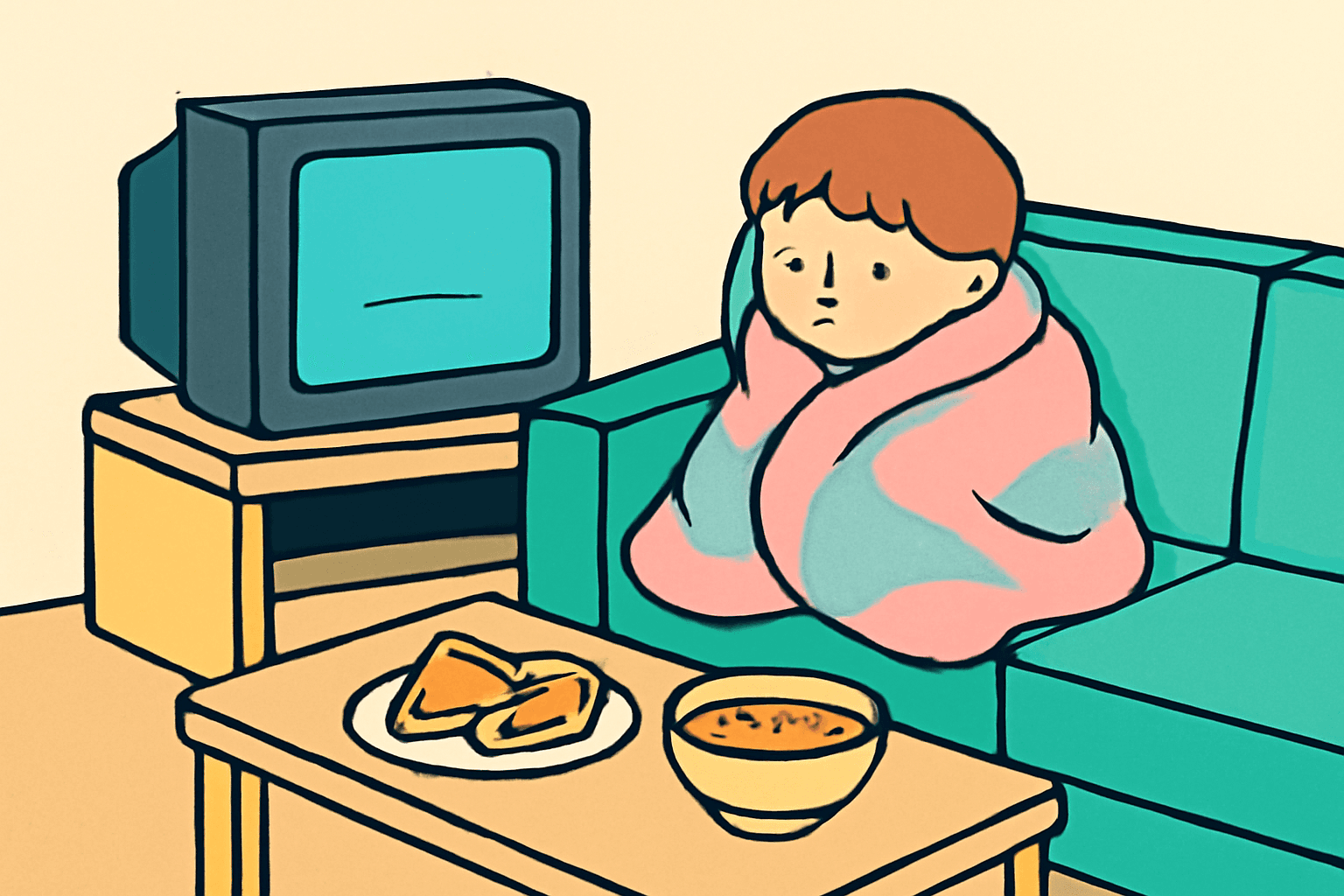
The first order of business was the nest. You'd drag your pillow and comforter down from your bedroom and establish yourself on the couch like a pharaoh being installed on a throne. There was a specific architecture to it. Pillow against the armrest at exactly the right angle. Blanket tucked under your feet. Remote control within arm's reach. A box of tissues on the coffee table for authenticity.
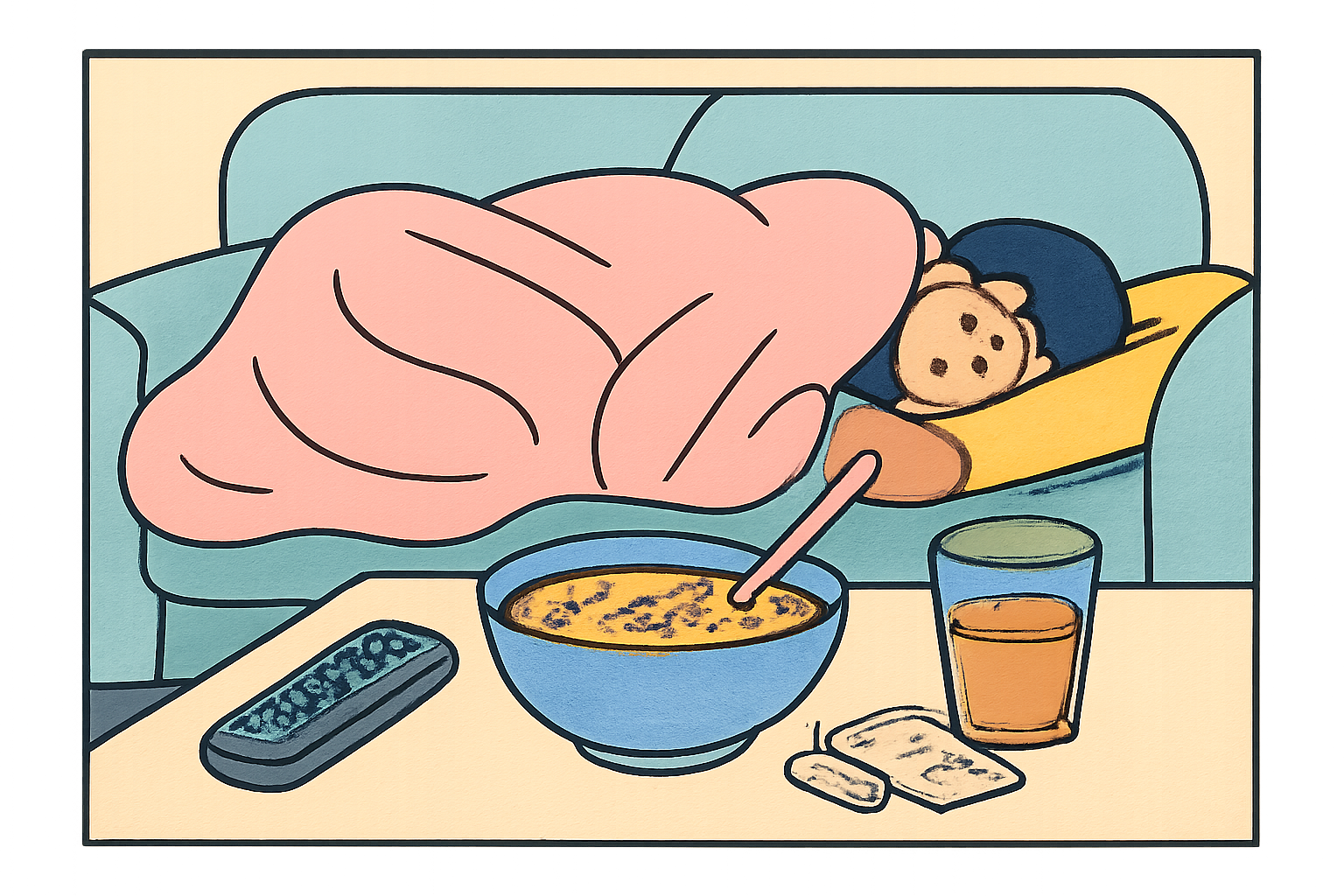

Your mom would bring you ginger ale. Not Sprite, not 7-Up - ginger ale, because in the 1990s, ginger ale was medicine. Canada Dry had more healing power than anything at CVS. She'd pour it into a glass and sometimes let it go flat first, which honestly tasted terrible, but the ritual was the point. You were being tended to. You were the center of someone's concern. The ginger ale was a sacrament.
Then came the toast. Cut into triangles, obviously, because triangles were how you knew someone loved you. Rectangle toast was for regular mornings. Triangle toast was for sick days and that distinction mattered enormously.
The Price is Right
Here's what nobody tells you about being a kid home sick on a weekday: daytime television is an alien planet. You had no idea this stuff existed. Your entire TV universe was after-school cartoons and Saturday morning lineups, and now suddenly you're discovering that adults have been watching this all day? Wild.
Bob Barker came on at 11. The Price is Right was the centerpiece of any legitimate sick day, the load-bearing wall of the whole operation. You'd lie there in your blanket nest watching contestants lose their minds over a new car and you'd think, I could do better than that. You had no concept of what a jar of peanut butter cost. You were nine. But you were absolutely certain that washer-dryer combo was overpriced.
Being home sick on a school day felt like a snow day you'd earned through suffering. Same magic, different currency.
Plinko was the best game. This was not up for debate. You'd watch that chip bounce down through the pegs and feel your whole body tense up like the outcome mattered to you personally. It did not. You were going to eat soup and fall asleep in forty-five minutes regardless. But in that moment, on that couch, Plinko was everything.
Bob Barker would remind you to spay and neuter your pets, and you'd nod solemnly like a tiny pope granting a blessing. You had no pets. Didn't matter.
The Soap Opera Hours
After Price is Right came the soap operas, and this is where the sick day got genuinely surreal. You'd flip through the channels and every single one had beautiful adults talking intensely in living rooms that were way too clean. Someone was always having an affair. Someone was always in a coma. Someone had an evil twin, apparently, which seemed like a thing that happened to adults with alarming regularity.
You understood none of it. You watched anyway. Days of Our Lives, General Hospital, All My Children - the names alone sounded like dispatches from a world you weren't ready for. You'd watch for twenty minutes, get confused by something involving a paternity test, and then switch to Maury, which was somehow even more confusing but louder about it.
Sometimes you'd land on a rerun of something good. Matlock. Murder, She Wrote. Old game shows on the Game Show Network. The sick day channel surf was its own genre of entertainment - not really watching anything, just drifting through the strange landscape of what America did between nine and three on a Tuesday.
Campbell's Chicken Noodle
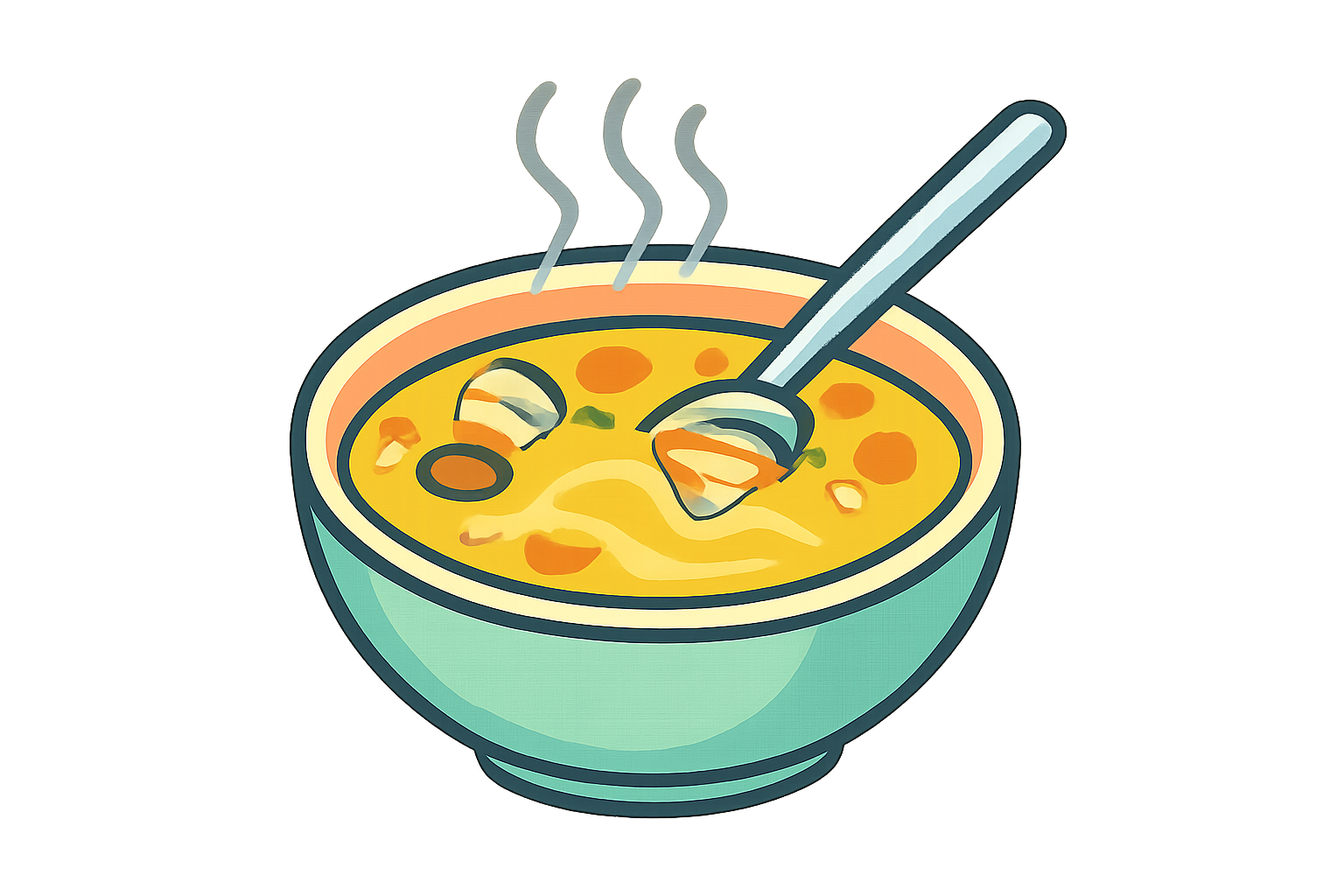
Lunch was Campbell's chicken noodle soup and there was no discussion about it. Not homemade. Not some other brand. Campbell's. From the red and white can that looked the same as it had since your grandparents were alive. Your mom would heat it up on the stove - the microwave version was acceptable but lesser - and bring it to you on a tray or just hand you the bowl with a stern warning not to spill it on the couch.
The noodles were always slightly too soft. The broth was always slightly too salty. It was perfect. It tasted like being taken care of. Every single time.
You'd eat it slowly, because eating slowly was part of the performance. You were sick, remember. Sick people don't wolf down their soup. Sick people take delicate sips and look bravely out the window like a Victorian child in a novel.
The Weird Luxury
Here's what made sick days actually good, the thing underneath all the soup and the game shows and the triangular toast: it was the feeling of being outside of time. School was happening right now, this very minute, without you. Your friends were sitting in Mrs. Henderson's class doing long division and you were here, in your pajamas, watching a lady from Tucson try to guess the price of Rice-A-Roni. You had escaped. You were in a parallel dimension where the rules didn't apply.
The house was different during the day. Quieter. The light came in at angles you'd never noticed because you were usually at school when it happened. You could hear the refrigerator humming. You could hear the clock in the hallway. The whole house revealed itself as a living thing that existed without you, and now you were getting to see its secret daytime life.
The house was different during the day. It had a whole secret life between nine and three that you never got to see.
There was a guilt to it, too, especially if you weren't actually sick. A low-grade awareness that you were getting away with something. But even that guilt was part of the pleasure. You'd earned this. Maybe through genuine illness, maybe through theatrical coughing and a well-timed thermometer - either way, you'd navigated the system and here you were. Horizontal. Warm. Sovereign.
The Afternoon Fade
By two o'clock, the magic started to thin. You'd been on the couch for five hours. You'd watched everything worth watching. The soap operas had gotten too weird. You were starting to feel that specific sick-day restlessness where you're too tired to do anything real but too awake to sleep. You'd flip through channels and find nothing. You'd stare at the ceiling. You'd wonder, briefly, what your friends were doing at recess.
Then around 3:30 the phone would ring and it'd be your best friend calling from their house, and they'd say "Were you sick today?" and you'd say "Yeah" in your most pathetic voice, and they'd say "You missed the pizza party" or "You missed the fire drill" and suddenly the sick day would feel like it cost you something after all.
But not enough. Never enough to make you regret it.
Your mom is in the kitchen. The soup bowl is in the sink. Bob Barker is saying goodbye. The couch still has the shape of you in it. Tomorrow you'll go back to school and someone will ask if you're feeling better and you'll say yes. You won't mention Plinko. Some things are just for you.