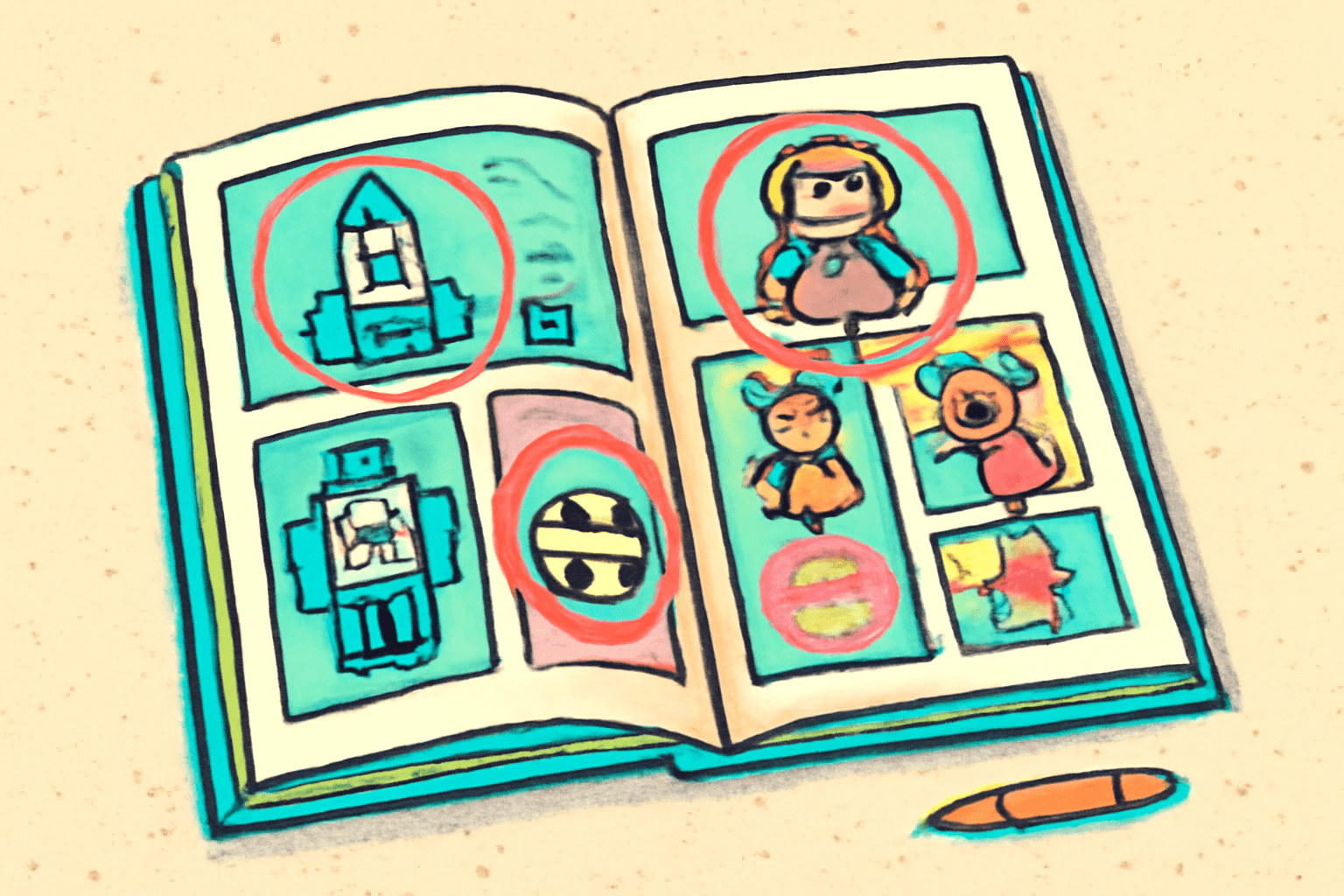
The Sears Wish Book arrived in September, which was way too early and also not early enough. It landed on the doorstep with a thud you could feel in your chest - four pounds of glossy paper, thick as a phonebook, smelling like ink and possibility. My mother would bring it inside and set it on the kitchen table like it was nothing. Like she didn't understand what she was holding. A sacred text. A road map to December. The most important document in the entire house.
I had my hands on it within minutes.
- Sears Wish Book
- JCPenney Christmas Catalogue
- Toys "R" Us Big Book
- KB Toys flyer (the thin one from the Sunday paper)
- Service Merchandise catalogue
- The random Radio Shack insert nobody asked for
The Sears book was the main event, but it wasn't alone. The JCPenney catalogue showed up around the same time, slightly thinner, slightly less exciting, like a B-side you still listened to. And then in October, the Toys "R" Us Big Book would appear - the one that was exclusively toys, no women's blazers or vacuum cleaners to flip past, just page after page of the stuff that mattered. That one was dangerous. That one could ruin you.
The Ritual
Everyone had their own system, but the broad strokes were universal. You got a marker - a Crayola marker, ideally, or a pen if you were feeling serious about it - and you opened the catalogue to the toy section. And you began to circle.
The first pass was pure instinct. No strategy, no restraint. You circled everything that made your pupils dilate. The LEGO castle. The Super Soaker 200. The Talkboy from Home Alone 2. The Easy-Bake Oven. That enormous G.I. Joe aircraft carrier that took up a full page and cost more than your family's monthly grocery bill. You circled it anyway. You circled it hard.
The catalogue didn't care what you could afford. That was the beauty of it. On paper, every kid was rich.
Some kids used a system. Stars for "I will actually die without this." Circles for "I really want this." Check marks for "I mean, if you're already at the store." I was not one of those kids. I circled everything with equal ferocity, as if volume alone could bend the universe toward generosity. Somewhere around page forty, my marker would start to dry out, and I'd switch colors, so the back half of the catalogue looked like a crime scene mapped by a very enthusiastic detective.
My older sister would circle maybe five things. Carefully. Precisely. She understood something about the economics of Christmas that I refused to learn. I looked at her restrained little circles and felt genuinely sorry for her. Where was the ambition? Where was the faith?
The Impossible Optimism
Here's the thing nobody tells you about circling toys in a catalogue: it isn't really about getting the toys. Not entirely. It's about the act of wanting itself - the way desire felt when it had a shape, a picture, a price tag. You could point at it. You could put your finger on the glossy page and say that one. In a world where most of what you wanted was vague and unnamed, the catalogue gave your longing a SKU number.
And there was a bizarre optimism to it. You'd circle a $200 Power Wheels Jeep knowing full well you lived in a two-bedroom apartment. You'd circle the entire Nintendo section even though your parents had made it extremely clear that video games rotted your brain. It didn't matter. The catalogue existed outside the normal rules of your household. It was a space where anything was possible, where your parents' budget was temporarily suspended, where the only limit was how many pages you could get through before dinner.
The real magic was the waiting. Between the circling and Christmas morning, there were weeks - sometimes months - of pure, unresolved hope. You'd go back to the catalogue. You'd revisit your circles. You'd reconsider. Maybe you didn't need the Creepy Crawlers oven and the crossbow. Maybe. But then you'd look at the picture again and think, no, you definitely needed both.
The catalogue lived on the coffee table or the floor next to your bed, dog-eared and wrinkled, the toy section swollen from handling while the housewares section remained pristine and untouched. You could open it to the exact page of your most-wanted item with your eyes closed. Muscle memory. Like a monk returning to the same passage of scripture.
The Window
What I didn't understand then - what I think about now - is that the catalogue was also a window into a world most of us couldn't actually access. Not fully. The Sears Wish Book presented a version of American childhood that was expansive, abundant, overflowing. Every kid in those photos had a finished basement. Every playroom was enormous. The Christmas trees were surrounded by so many presents they looked fake.
For a lot of us, the gap between the catalogue and real life was significant. You'd circle thirty things and get two. Maybe three if it was a good year. And one of them would be the off-brand version - not the real Skip-It, but something from the drugstore that sort of worked the same way but also sort of didn't. You learned to perform gratitude anyway, because you could see in your mother's face that she'd tried, that she'd done the math and stretched further than she probably should have.
The distance between what you circled and what appeared under the tree was your first lesson in the difference between wanting and having.
That gap - between the circled page and Christmas morning - was, I think, one of the first real negotiations with disappointment that most of us experienced. Not a devastating one. Not traumatic. Just the slow, annual dawning that the world does not deliver everything you ask for, no matter how neatly you circle it.
The Thing You Didn't Get
Everyone has one. The toy you circled every single year that never materialized. Mine was the Power Wheels. Three years running, I circled that thing. Drew arrows pointing to it. Wrote "PLEASE" in the margin. It never came. It was never going to come. But I kept circling it the way you keep wishing on birthday candles long after you've stopped believing - because the ritual mattered more than the result.
My friend David wanted a Sega Genesis for two straight Christmases and got a Sega Game Gear instead, which was the kind of lateral substitution that felt like a practical joke by the universe. It played Sonic, technically. But it ate six AA batteries every forty-five minutes, and holding it felt like gripping a small briefcase. He was grateful. He was also quietly devastated. These two things coexisted, the way they always do when you're eight.
The catalogues are gone now, mostly. Sears is gone. The Wish Book made a brief comeback and then disappeared again, like a ghost who shows up just long enough to make you sad. Toys "R" Us closed, reopened as something smaller and less convincing, a cover band of itself. JCPenney still exists but barely, and nobody's kid is circling anything in it.
Now kids make Amazon wish lists. They send links. They share screenshots. It's more efficient. They will probably get exactly what they want, because the algorithm knows them better than they know themselves, and two-day shipping has eliminated the suspense entirely.
I don't think that's worse, necessarily. But it's different. There was something about the physical act of it - the marker in your hand, the glossy page, the enormous stupid hope of circling a toy that cost more than your dad made in a day - that felt like a kind of practice. Practice for wanting things. Practice for not getting them. Practice for discovering that the wanting was, in many ways, the best part.
Somewhere in a landfill, there's a 1994 Sears Wish Book with my circles still in it. Thirty-seven items marked with a dying red Crayola marker. I got maybe four of them. It was the best Christmas of my life. I think about that sometimes.
The marker is uncapped. The page is open. Circle everything. You have until December.