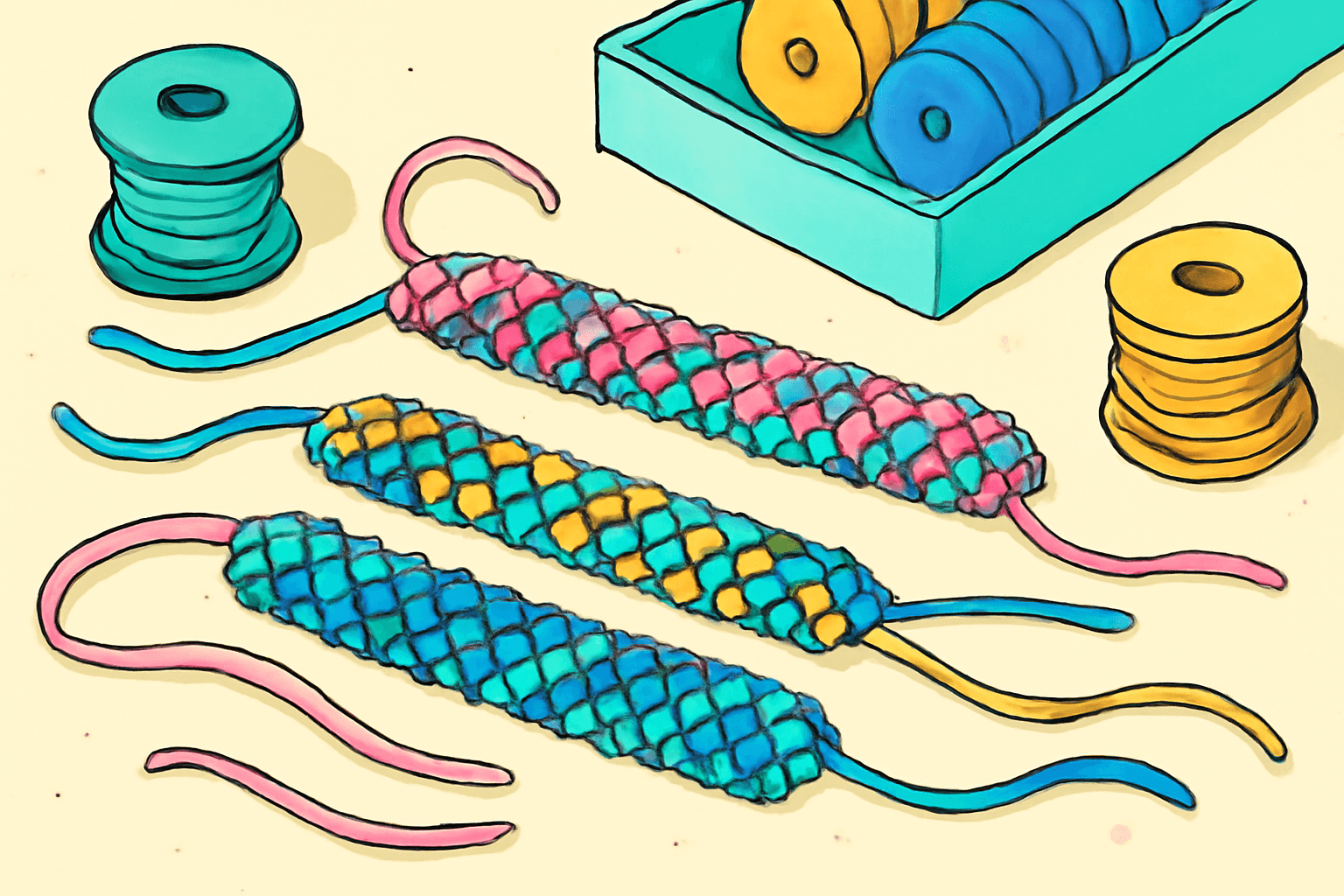
Somebody handed you two strands of flat plastic lace - one purple, one white, or maybe neon green and neon pink, whatever was left in the bucket - and said, "I'll teach you the box stitch." And before you could ask what a box stitch was, or why you would want to know, or what the finished product would be, their fingers were already moving. Over, under, pull tight. Over, under, pull tight. They did it fast, the way someone shows you something they learned three days ago and have already decided is their entire personality.
"See? Easy."
It was not easy.
The Lace
The material was called gimp. Or lanyard. Or boondoggle. Or scoubidou, if you were fancy or European or had a craft book from the library that used words nobody at Camp Whispering Pines was going to say out loud. But mostly people just said "the lace stuff" or "those plastic string things" or held up a strand and said "this."
It came in every color. Flat, smooth, slightly waxy, about a quarter-inch wide. You could buy it at the camp store or the craft store or, if you were lucky, someone's older sibling had a massive tangled collection in a shoebox and would let you pick through it. The colors mattered more than you'd think. Certain combinations meant certain things, though what they meant changed depending on which cabin you were in and who had appointed themselves the authority on gimp bracelet color theory.
Somebody showed you the box stitch the way someone shows you something they learned three days ago and have already decided is their entire personality.
Black and red was cool. All neon was fun but unserious. Clear and purple was somehow sophisticated. Glow-in-the-dark was the flex, but it only came in that one sickly green-yellow color and it barely glowed and you had to hold it directly under a lamp for thirty seconds and then cup your hands around it in the dark to see anything at all. But you did. Every night. Because you'd earned it.
The Box Stitch
The box stitch was the baseline. The minimum. The thing you had to learn before anyone would take you seriously at the lanyard table, which was a real place where real social dynamics played out between children aged eight and thirteen who were ranking each other based on plastic lace technique.
You started with two strands crossed in the middle, four tails hanging down like a little plus sign. Then you folded them over each other in a specific pattern - right over left, top over bottom, thread through, pull tight - and if you did it correctly, a small square knot appeared. Then you did it again. And again. And slowly, a square tube of woven plastic began to grow from between your fingers.
The first inch was always ugly. Loose, uneven, the kind of thing that made the kid next to you lean over and say, "You're doing it wrong," even though they'd learned this same stitch forty-eight hours ago and their bracelet looked like it had been assembled by a distressed raccoon.
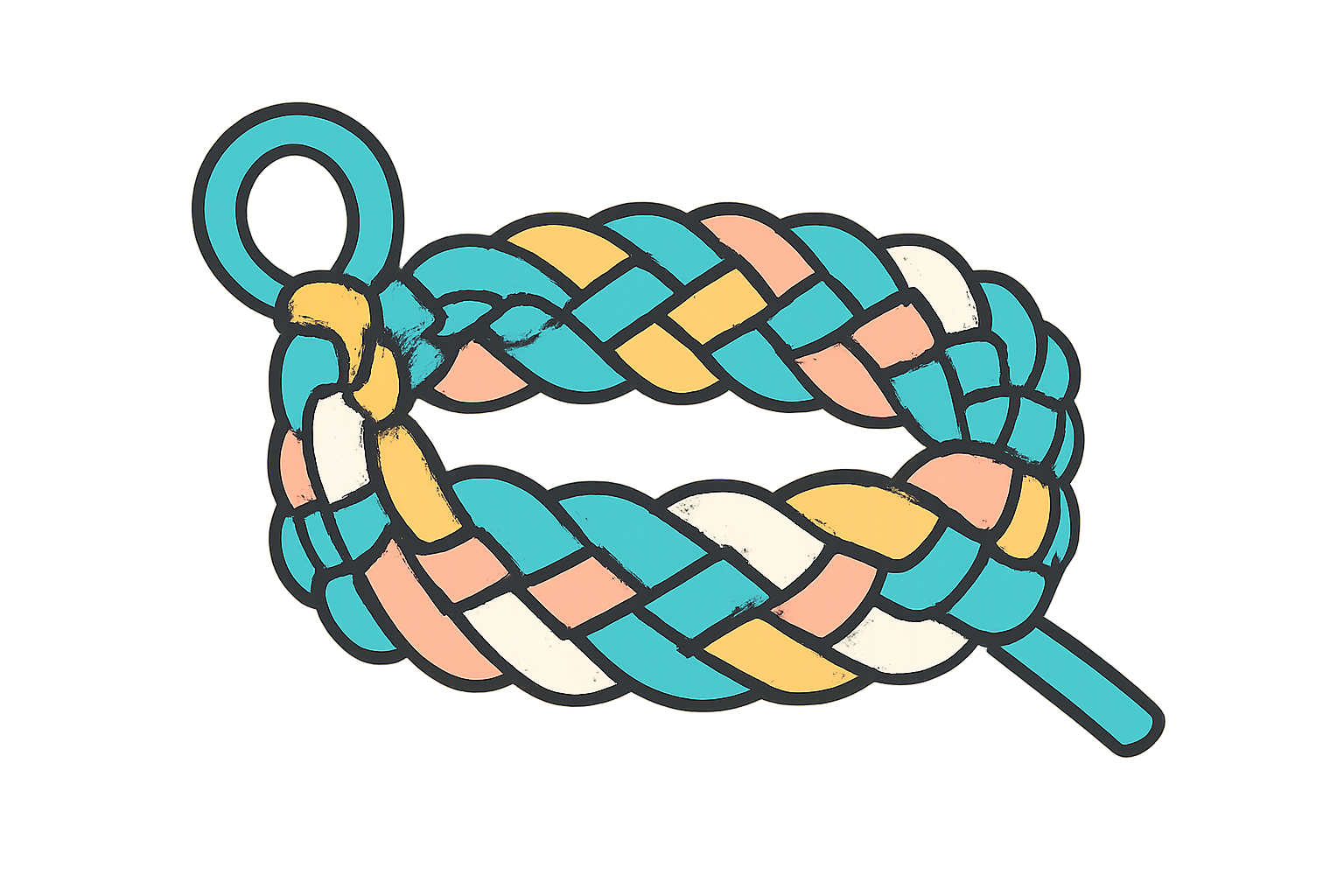
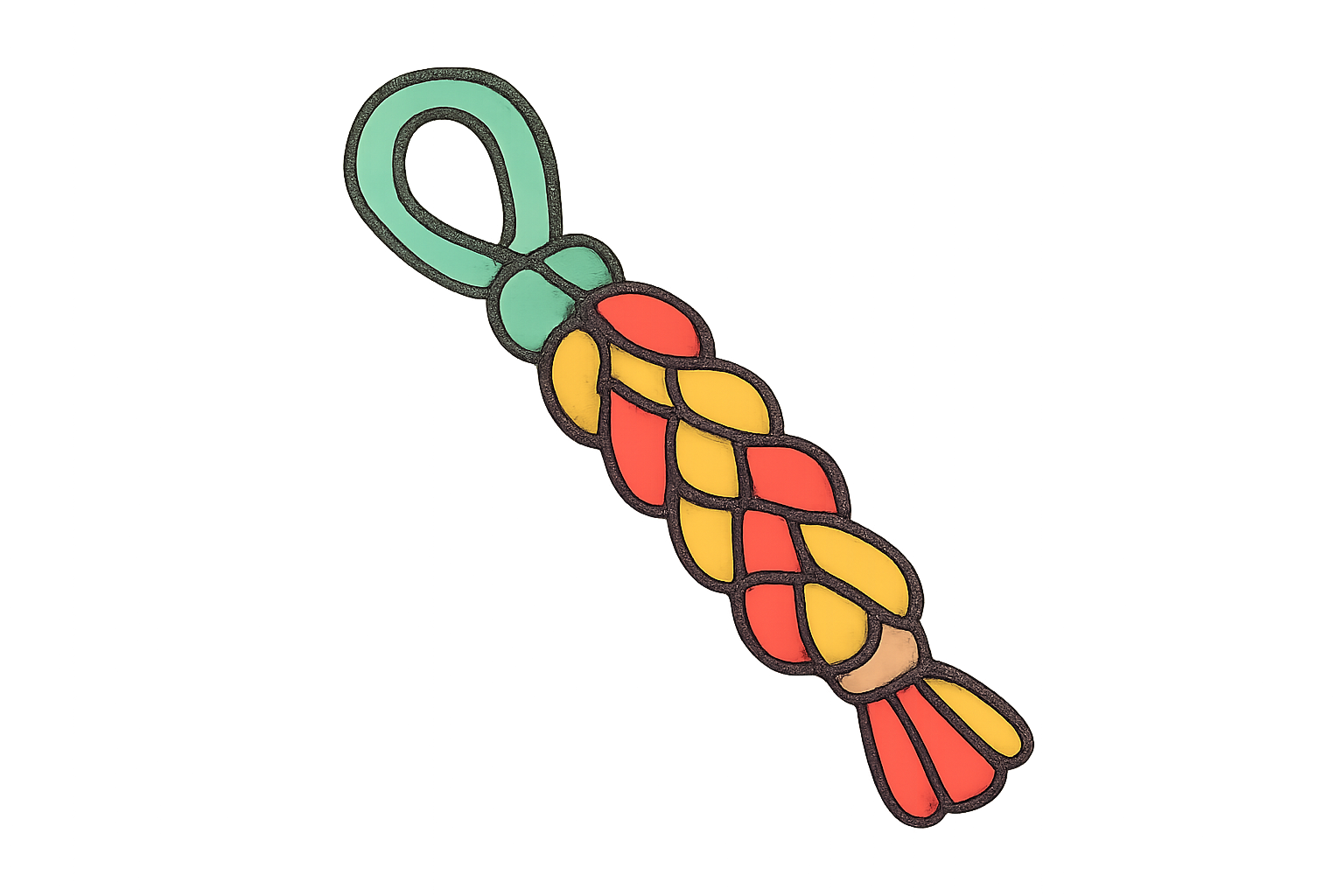
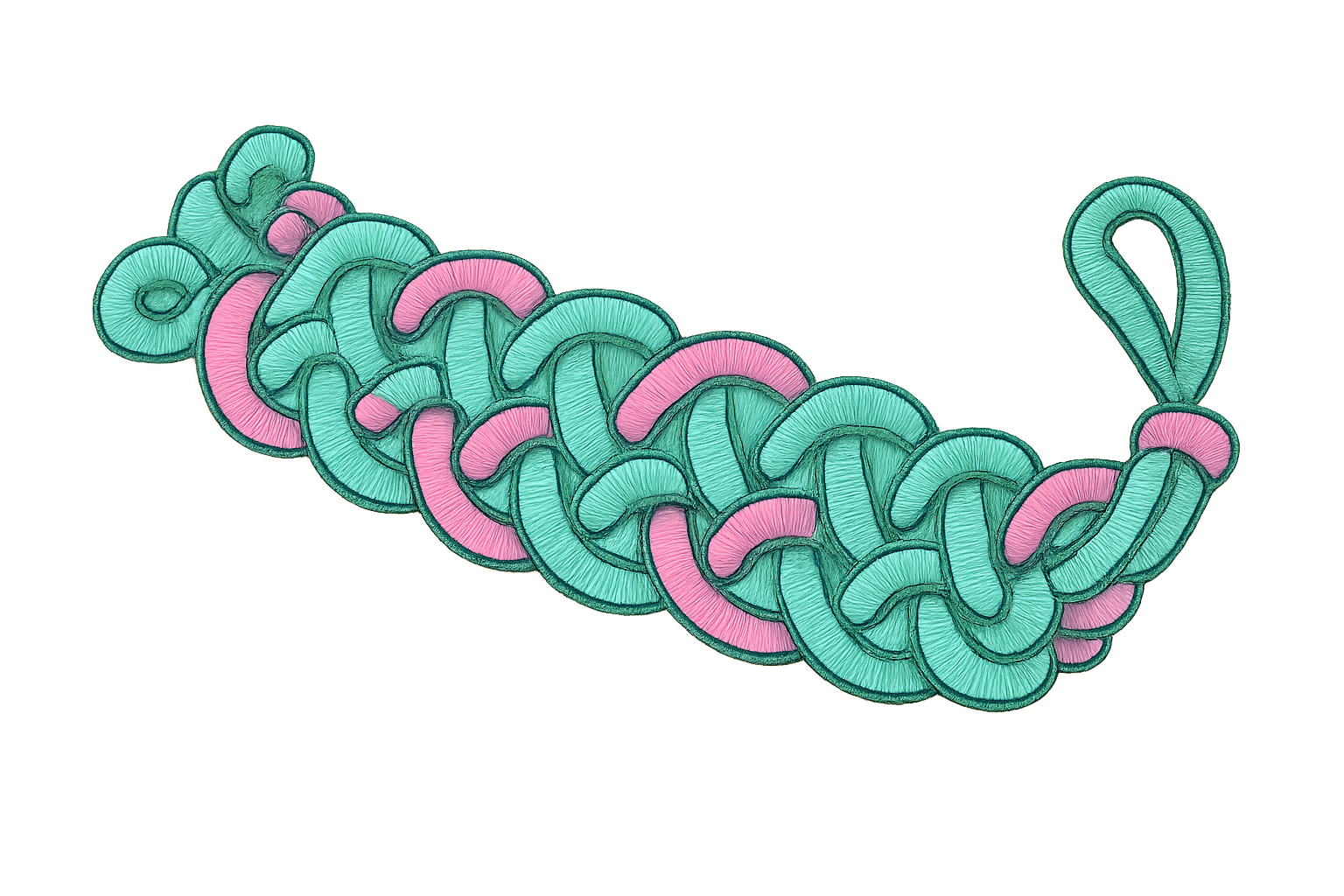
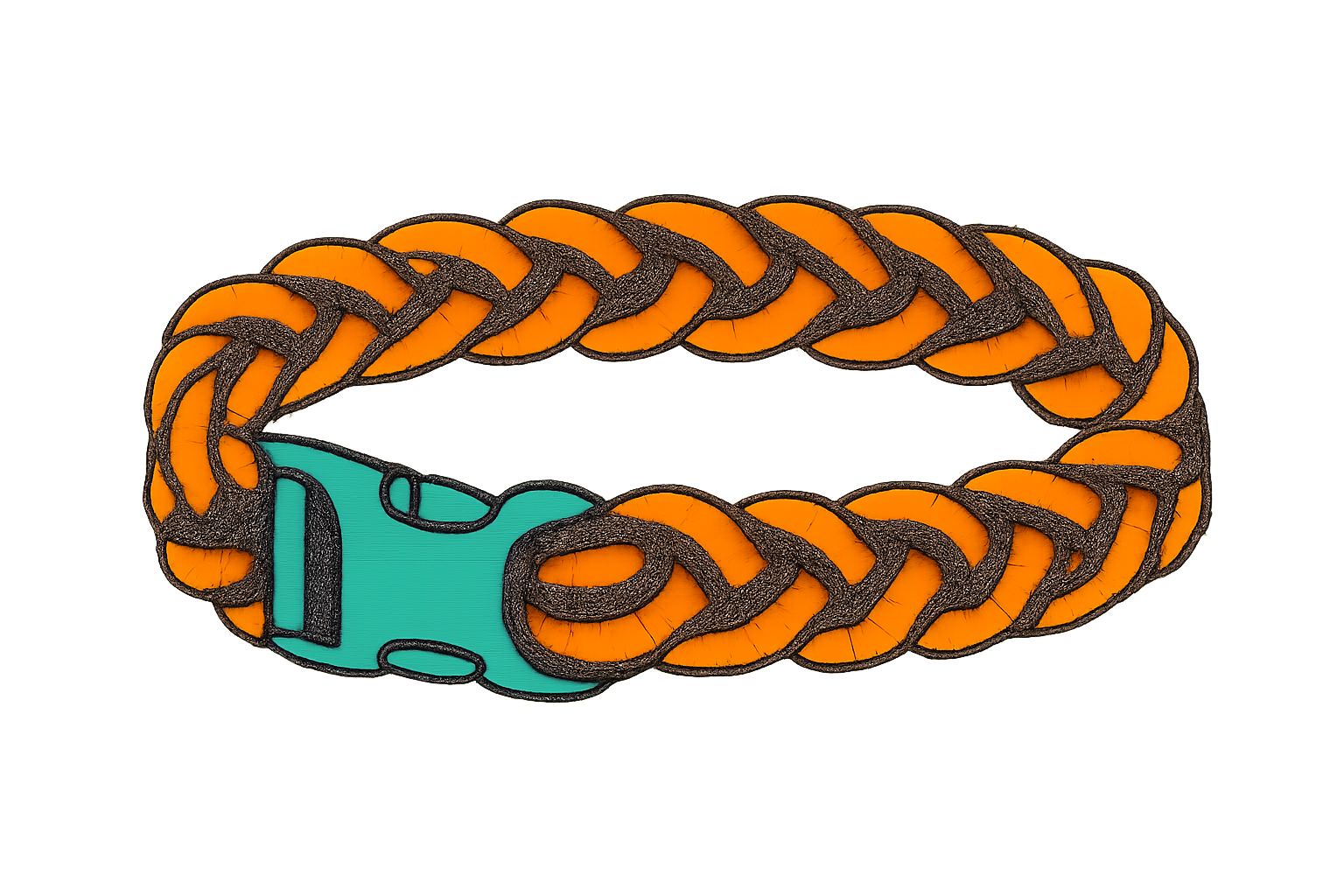
But by inch two, something clicked. Your fingers remembered the pattern. Over, under, through, pull. Over, under, through, pull. You stopped thinking about it and started just doing it, the way you'd eventually learn to type or tie your shoes or drive - muscle memory taking over, your hands moving faster than your brain, the little square tube growing longer and longer while you talked to the kid next to you about whether the lake had leeches in it (it did) and whether tomorrow's activity was archery or canoeing (it was always canoeing).
The Product
Here's the thing nobody talks about: nothing you made was good. Nothing anyone made was good. The finished gimp bracelet or keychain or - god help you - zipper pull was always a lumpy, slightly crooked tube of woven plastic that served no functional purpose whatsoever. It didn't hold keys well. It wasn't comfortable as a bracelet. It wasn't attractive. It was, objectively, a piece of garbage.
And you put it on your backpack and it stayed there for the next nine months.
The finished bracelet served no functional purpose whatsoever. It was, objectively, a piece of garbage. And you put it on your backpack and it stayed there for the next nine months.
Because the product was never the point. The gimp bracelet on your backpack zipper wasn't jewelry or decoration. It was a credential. It said: I went somewhere. I sat at a table with other kids. I learned a thing with my hands. Someone taught me and I taught someone else and we did this together in a place that was not school and not home, a place where the normal rules didn't apply and you could spend an entire afternoon turning plastic lace into nothing and nobody told you to do something more productive.
The bracelet was proof you'd been there. And for the whole school year after, every time you unzipped your backpack and the little gimp tube swung around, you remembered. Not the specific day. Not the specific kid who taught you. Just the feeling of being somewhere else, doing something pointless, with people who didn't need you to be anything other than a kid with two strands of plastic and a willingness to learn the box stitch.
The Economy
Gimp had an economy. Not a formal one - nobody was trading futures on neon orange lanyard lace - but there were rules. If you had a color someone else wanted, you had leverage. If someone taught you a new stitch, you owed them. If you made a bracelet for someone, that meant something. It was a friendship bracelet without the name, a gift that said "I spent forty-five minutes on this and it's not very good but I picked these colors because they're your favorite colors and I want you to have it."
The receiving of a gimp bracelet was its own ritual. You'd put it on immediately. You'd wear it until it literally disintegrated, which took longer than you'd expect because that plastic was surprisingly durable. It would get dirty and faded and the colors would go dull and the ends would start to fray where you'd melted them together with - what? A lighter someone's older brother had? A match? The stove in the mess hall kitchen when the counselor wasn't looking? The finishing technique was always vaguely dangerous and never discussed in detail.
I found one last year. Not on a backpack - in a drawer. A box of stuff from my childhood that my mom had saved and eventually handed off to me in a shoebox that I'd shoved into a closet and forgotten about. Under some photos and a Camp Whispering Pines t-shirt that wouldn't fit a large cat, there it was. Purple and white. Box stitch. About four inches long with a little loop at the top where it had once hung from something.
It was stiff now. The plastic had lost whatever flexibility it once had, gone rigid and slightly brittle, the way old plastic does. The colors were faded but still recognizable. The stitching was uneven - tighter at one end where I'd been concentrating, looser in the middle where I'd probably been talking to someone about leeches.
I don't remember making it. I don't remember who taught me or what day it was or whether I was eight or ten or twelve. I don't remember if I was proud of it or embarrassed by it or if I made it for myself or for someone who didn't end up wanting it.
But I held it for a while. Turned it over in my fingers. Felt the flat woven squares, each one a little box stitch that my hands had made when my hands were small enough that this seemed like a thing worth doing. Over, under, through, pull. Over, under, through, pull.
I put it back in the box. But I moved the box to a shelf where I can see it. Which is not the same as putting it on my backpack, but is - I think - the grown-up version of the same thing. Proof that I was somewhere once. That someone showed me what to do with my hands. That I made a thing out of nothing, and it didn't need to be good. It just needed to be mine.