I was nine years old when Timothy McVeigh blew up a federal building in Oklahoma City and killed 168 people, including nineteen children in a daycare on the second floor. I remember the image on the television - the firefighter carrying the baby. I remember my mom turning it off and saying something about the world, something I've since forgotten. I remember going outside to play afterward because I was nine and that's what you did.
That was April 1995. The simple times.
The Decade That Wasn't
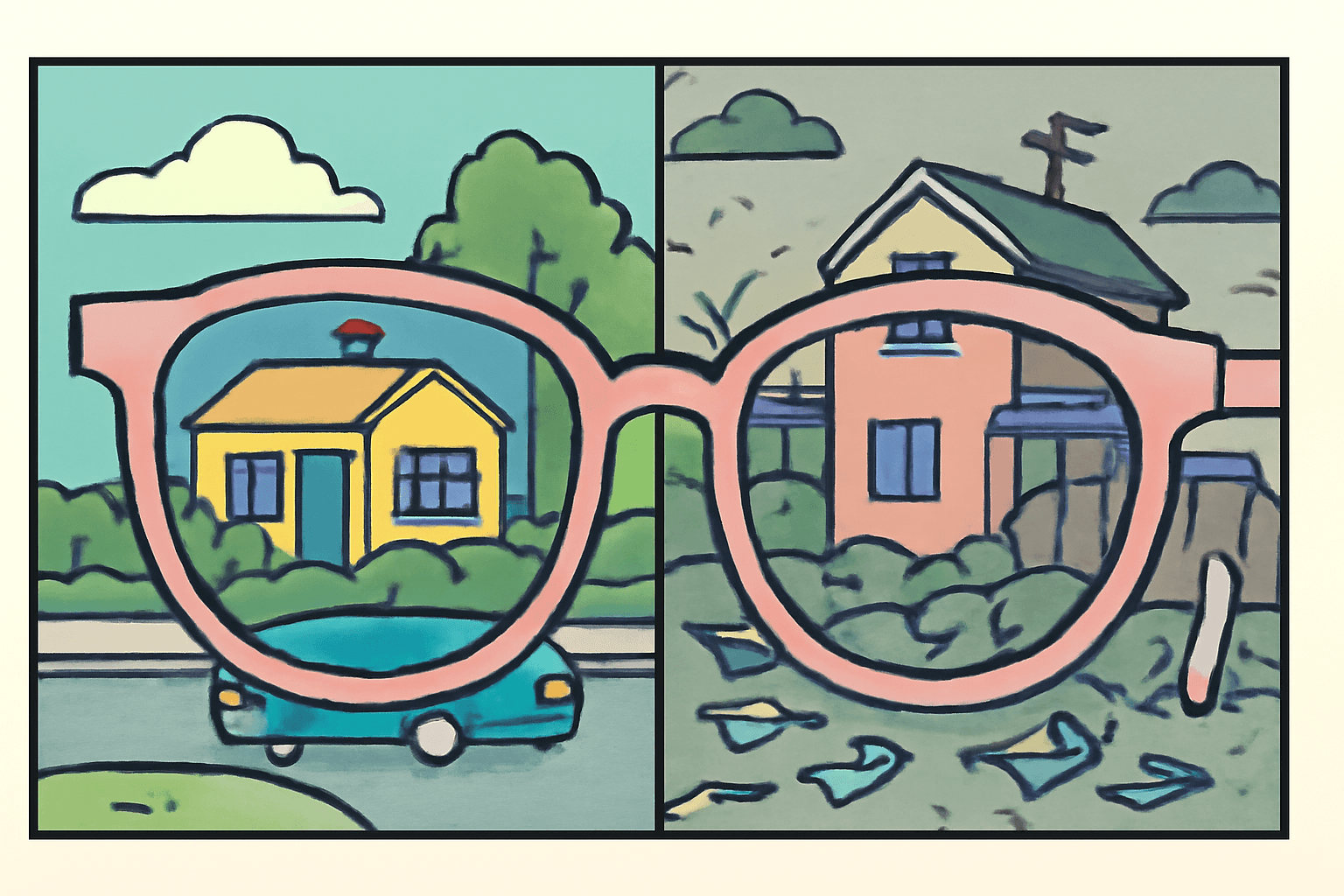
Here's the thing about the 90s being simpler: they weren't. Not even a little. We were just - and I mean this literally - too short to see over the counter. The decade happened above us and around us and we caught it in fragments, half-heard conversations and news broadcasts we didn't understand, and we assembled from those fragments a feeling that everything was basically fine. Because for us, in our particular kid-sized corner, it mostly was.
But the actual 1990s? The ones the adults were living in?
The murder rate in 1991 was nearly double what it is now. Double. Carjacking was so common it became its own category of crime. Crack cocaine had hollowed out entire neighborhoods in every major American city, and the policy response was mass incarceration on a scale this country had never attempted. Three strikes laws. Mandatory minimums. A generation of Black men disappeared into the prison system while the rest of us watched Fresh Prince and thought things were pretty chill.
The 90s weren't simpler. We were just too short to see over the counter.
The AIDS crisis was still killing people by the tens of thousands. By the mid-90s, over 300,000 Americans had died. Three hundred thousand. An entire city of people, gone, while significant portions of the country argued about whether they deserved it. Ryan White had to fight to attend his own school. Pedro Zamora died on MTV and America treated it like a very special episode.
We remember the 90s as the decade of Nickelodeon and Super Soakers. And it was. It was also the decade of Rodney King, and the riots that followed, and a city on fire, and Reginald Denny pulled from his truck and beaten nearly to death on live television. It was the decade of the Unabomber and the Olympic Park bombing and Waco and Ruby Ridge. It was Columbine - two kids with guns in a school library, which was supposed to be the safest place in the world.
Simple times.
The Filter of Four Feet Tall
I don't say any of this to be grim. I say it because the nostalgia machine has gotten so efficient that we've started believing our own mythology. And the mythology goes like this: things used to be good, then they got bad, and the dividing line is roughly whenever you turned thirteen.
The truth is more ordinary and more interesting. Childhood is a filter. A powerful one. When you're eight, the world is the size of your block, and if your block is okay, the world is okay. You don't know about crime statistics. You don't understand what the news is actually saying. Your parents absorb the terror so you don't have to - that's basically the whole job description - and you interpret their success at this as evidence that there was nothing to be terrified of.
- The Rwandan genocide (1994)
- The Oklahoma City bombing (1995)
- The Olympic Park bombing (1996)
- The murder rate peaking at levels we haven't seen since
- The AIDS crisis killing hundreds of thousands
- The LA riots
- Matthew Shepard
I remember 1996 as the year I got a Nintendo 64. It was also the year a pipe bomb went off at the Atlanta Olympics and killed a woman named Alice Hawthorne. I didn't know her name then. I barely registered it happened. I was playing Mario 64 and learning that you could throw Bowser by his tail, and that seemed like the most important thing in the world. Because I was ten. And that's how being ten works.
The Gulf Nobody Talks About
There's another part of this that the nostalgia crowd skips over, and it's the one that makes me most uncomfortable. The 90s were great if you were a certain kind of kid. Specifically: white, suburban, middle class, with two parents and a house and a neighborhood where the streetlight rule applied.
If you were a kid in Cabrini-Green or East New York or South Central, the 90s were not a Capri Sun commercial. If your family couldn't afford the Scholastic Book Fair, the magic was different. If you were a gay teenager in a small town in 1997, the simplicity of the era meant something very different - it meant silence, and silence meant danger. If you were undocumented, if you were disabled, if you were any of the things that 90s pop culture had no interest in representing, the decade's simplicity was someone else's simplicity. You were just living in it.
The 90s were great if you were a certain kind of kid. The nostalgia tells on us more than we realize.
I'm not trying to ruin anyone's childhood here. My childhood was good. I had the bikes and the block parties and the summers that lasted forever. But I've started to notice that when we talk about the 90s as the last good era, we're really talking about a very specific experience, and we're universalizing it in a way that erases a lot of people who were right there with us, having a much harder time.
Every Generation Does This
Here's the part where it gets really predictable. Because every generation - every single one - does the exact same thing. Your grandparents thought the 1950s were the last good era, conveniently editing out segregation and polio and the fact that women couldn't open their own bank accounts. Your parents thought the 70s or 80s were the golden age, skipping right past stagflation and the Cold War and the fact that their parents hit them with wooden spoons and called it discipline.
And now we do it with the 90s. We sand down the edges and keep the good parts and present the result as evidence that the world has gotten worse, when really what happened is that we got older and the filter stopped working.
The kids who are ten right now will do this with the 2020s. They'll talk about whatever their version of a Super Soaker is with a faraway look in their eyes, and they'll say things like "remember when things were simple?" and they'll mean it completely. Because for them, right now, things are simple. Their parents are absorbing the terror. The filter is working. Twenty years from now they'll look back and see only the golden parts, and they'll wonder what went wrong, and the answer will be: nothing went wrong. You just grew up. The world was always like this.
So What Do We Do With It
I don't think the answer is to stop being nostalgic. Nostalgia is fine. It's human. I still get a warm feeling when I hear the Are You Afraid of the Dark theme song, and I'm not going to apologize for that.
But maybe we can be nostalgic without being dishonest. Maybe we can love the things we loved - the Saturday morning cartoons, the Blockbuster runs, the long summer afternoons with no agenda - without pretending that the decade that contained them was some kind of paradise. The good stuff was real. It was also happening alongside a lot of very bad stuff that we were simply too young and too lucky to notice.
The 90s weren't simpler. We were simpler. And there's a big difference.
Your childhood wasn't the last good era. It was just the last time you didn't have to pay attention. That's not the same thing, but I understand why it feels like it is.