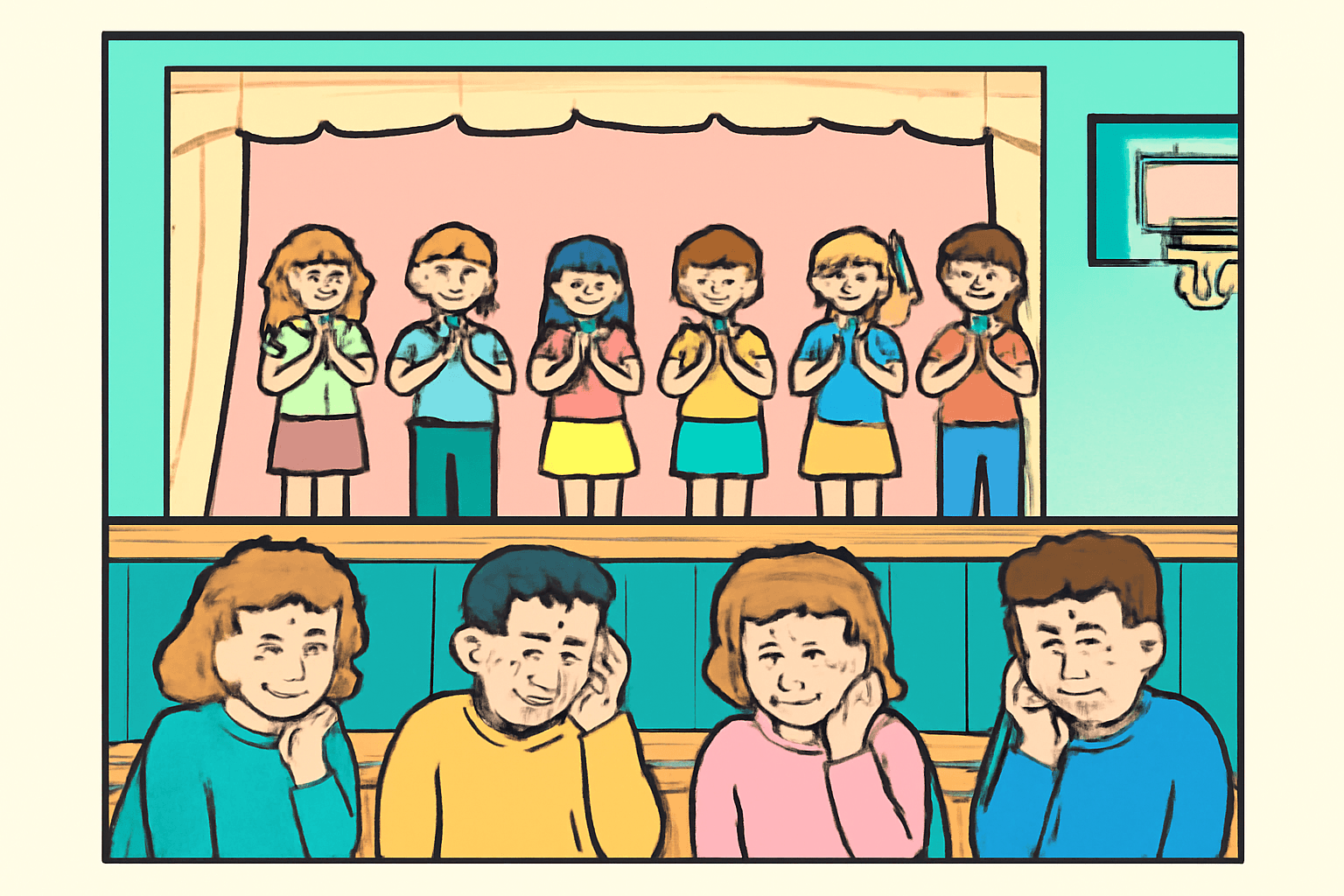
Mrs. Halverson handed them out on a Tuesday in September, one per kid, still sealed in plastic bags. Cream-colored Yamaha sopranos. They looked like toys. They smelled like the inside of a new shower curtain. Twenty-eight third graders at Ridgewood Elementary ripped open the packaging simultaneously, and within forty-five seconds the room sounded like a pet store fire. That was day one. It got worse from there.
If you attended public school in America between roughly 1985 and 2005, you played the recorder. This wasn't optional. This wasn't an elective. This was mandatory music education, handed down from some distant curriculum office by people who had clearly never been in a room with thirty eight-year-olds blowing into plastic tubes at maximum lung capacity. Somewhere, a school board had decided that the soprano recorder was the ideal introductory instrument for children. They were wrong. They were so profoundly wrong. But by the time anyone figured that out, millions of recorders had already been purchased and millions of families had already suffered.
The Repertoire
Let's talk about the music. I use that word loosely.
The entire third-grade recorder curriculum consisted of approximately three songs. "Hot Cross Buns" was the opener - three notes, repeated, forever. B-A-G. B-A-G. G-G-G-G-A-A-A-A-B-A-G. You could learn it in ten minutes. You would play it for ten weeks. It became the soundtrack of your life. It replaced thought. You'd be sitting at dinner and your brain would just start going hot cross buns, hot cross buns, one a penny two a penny, hot cross buns and there was nothing you could do about it.
- Hot Cross Buns: The national anthem of suffering.
- Mary Had a Little Lamb: Four notes. A lateral move at best.
- Ode to Joy: The ambitious finale that maybe two kids could actually play.
- Twinkle Twinkle Little Star: For the overachievers who finished early.
- Whatever your teacher made up: Usually just Hot Cross Buns again but slower.
"Mary Had a Little Lamb" came next, and it felt like a promotion. A fourth note. New territory. Some kids peaked here. Then, if your music teacher was feeling bold, you'd attempt something classical - "Ode to Joy" was a popular choice - and the gap between the sheet music and the sound coming out of the room was wide enough to drive a school bus through.
That was it. That was the whole program. Months of instruction, distilled into a handful of songs that collectively used maybe six notes. And yet somehow, somehow, most of us couldn't play any of them correctly.
The Two Kinds of Kids
Every recorder class had the same cast of characters. There was the kid who could actually play. You know the one. She practiced at home - genuinely practiced, not just made noise - and her "Hot Cross Buns" sounded like an actual melody produced by an actual instrument. She held the recorder correctly, covered the holes completely, blew with appropriate force. She was a miracle. She was also completely drowned out by everyone else.
Because then there was the other kid. The one who treated the recorder like a weapon. Who blew into it with the full force of his nine-year-old lungs, producing a sound that was less "music" and more "emergency broadcast." His fingers weren't covering any of the holes properly. It didn't matter. Volume was the only metric he recognized. He was playing the recorder the way a fire hose puts out a fire - with maximum pressure and zero precision.
The recorder was the great equalizer. Talent was irrelevant. Effort was irrelevant. Everyone sounded bad. The kid who practiced and the kid who didn't were separated by a margin so thin that no parent in the audience could detect it.
Most of us fell somewhere in the middle. We could sort of play the notes. We mostly remembered the fingerings. But the sound that came out was always slightly off - a little squeaky, a little breathy, a little like a goose trying to communicate an idea it couldn't quite articulate. The recorder didn't reward mediocrity. It didn't reward excellence either. It just sat there in your hands, tasting like plastic, producing a noise that existed in a frequency specifically designed to cause discomfort in adults.
The Plastic Taste
Can we talk about the mouthpiece for a second? That little beige plastic rectangle that you put your actual mouth on, day after day, in a classroom where someone always had a cold? The taste was indescribable and also completely universal. Every kid who ever played a Yamaha soprano recorder knows exactly what I'm talking about. It tasted like a hospital mixed with a Tupperware lid. It tasted like nothing and everything at the same time. It tasted like school.
And you'd take that mouthpiece out during the parts where you weren't playing and just hold the recorder like a baton, and there'd be condensation in the windway because thirty kids had been breathing warm air into a plastic tube, and sometimes - I'm sorry, but this is the truth - sometimes a little moisture would drip out the bottom. This was a health situation. Nobody acknowledged it as a health situation. It was 1996. We were built different. We shared recorders from the lost and found if we forgot ours at home.
Practicing at Home
The thing about the recorder is that it wasn't a quiet instrument. It wasn't even a medium instrument. It was a piercing instrument, tuned to a frequency that traveled through walls, floors, closed doors, and the patience of every person in your household.
Your parents told you to practice. They had to. The concert was coming. So you sat in your bedroom - or, if your parents were strategic, the garage - and played "Hot Cross Buns" seventeen times in a row while your older sister banged on the wall and your dad turned the TV up three notches and your mom smiled a smile that didn't reach her eyes and said "that sounds great, honey."
It did not sound great. Everyone in the house knew it did not sound great. The dog knew. The dog had left the room on the second measure and was now hiding under the bed in your parents' room, which was the farthest point from the source of the sound. But the concert was in two weeks and you had to practice, so the family absorbed it. They took the hit. This is what love looks like, actually. Not grand gestures. Just sitting in the living room pretending you can't hear "Mary Had a Little Lamb" being performed at a frequency that could strip paint.
The Concert
And then came the night. The big show. The elementary school multipurpose room - half cafeteria, half auditorium, fully inadequate for any purpose - filled with folding chairs and parents. Dads with camcorders the size of a shoebox, filming everything, because this was the nineties and you documented your children's milestones on magnetic tape or you weren't really a parent.
Thirty kids playing the recorder in unison doesn't sound like thirty kids playing the recorder in unison. It sounds like a flock of geese being slowly compressed in a trash compactor.
The music teacher stood up front with that desperate, encouraging smile - the one that said I've been preparing for this for three months and I know exactly what's about to happen. She raised her hands. She counted off. And thirty children raised their recorders to their lips and played "Hot Cross Buns" simultaneously, and the sound that emerged was something that no recording could capture and no memory could exaggerate. It was a wall of noise. A shrill, wavering, multi-pitched assault that filled the room and rattled the trophy case by the gym doors. Every child was playing at a slightly different tempo. Several were playing entirely different songs. One kid in the back row was just blowing into the recorder without moving his fingers, producing a single sustained note like a smoke detector with feelings.
And the parents. God, the parents. They sat in those metal folding chairs with their camcorders running and they smiled. They smiled so hard. Your mom nudged your dad and pointed at you - third row, second from the left - and your dad zoomed in with the camcorder, and they both looked so proud, and the sound was objectively, scientifically terrible, and it didn't matter at all. They clapped like they'd just seen the Philharmonic. They clapped like it was beautiful. Maybe, in a way it takes you twenty-five years to understand, it was.
The Aftermath
The recorder went home with you that night and lived in your desk drawer for approximately six to eighteen months before quietly disappearing. Nobody threw it away, exactly. It just migrated - to a junk drawer, to a closet shelf, to a box in the garage labeled "MISC" in your mom's handwriting. Some of them are probably still there, buried under tax returns and broken flashlights, waiting.
Every once in a while I'll see a soprano recorder at a garage sale or in the back of a thrift store bin and the whole thing comes back. The plastic taste. The squeak when you didn't cover the third hole all the way. Mrs. Halverson counting us in. The sound of thirty kids trying their best and falling magnificently short.
My son is in second grade now. Next year, if the curriculum hasn't changed, he'll bring one home. A cream-colored Yamaha in a plastic bag. He'll play "Hot Cross Buns" in his bedroom while the dog leaves the room. I'll sit on the couch and turn the TV up three notches and smile a smile that doesn't reach my eyes and say that sounds great, buddy.
And I'll mean it the same complicated way my parents did - not because the sound is good, but because the kid making it is mine, and he's eight, and he's trying, and the concert is in two weeks, and none of this lasts.