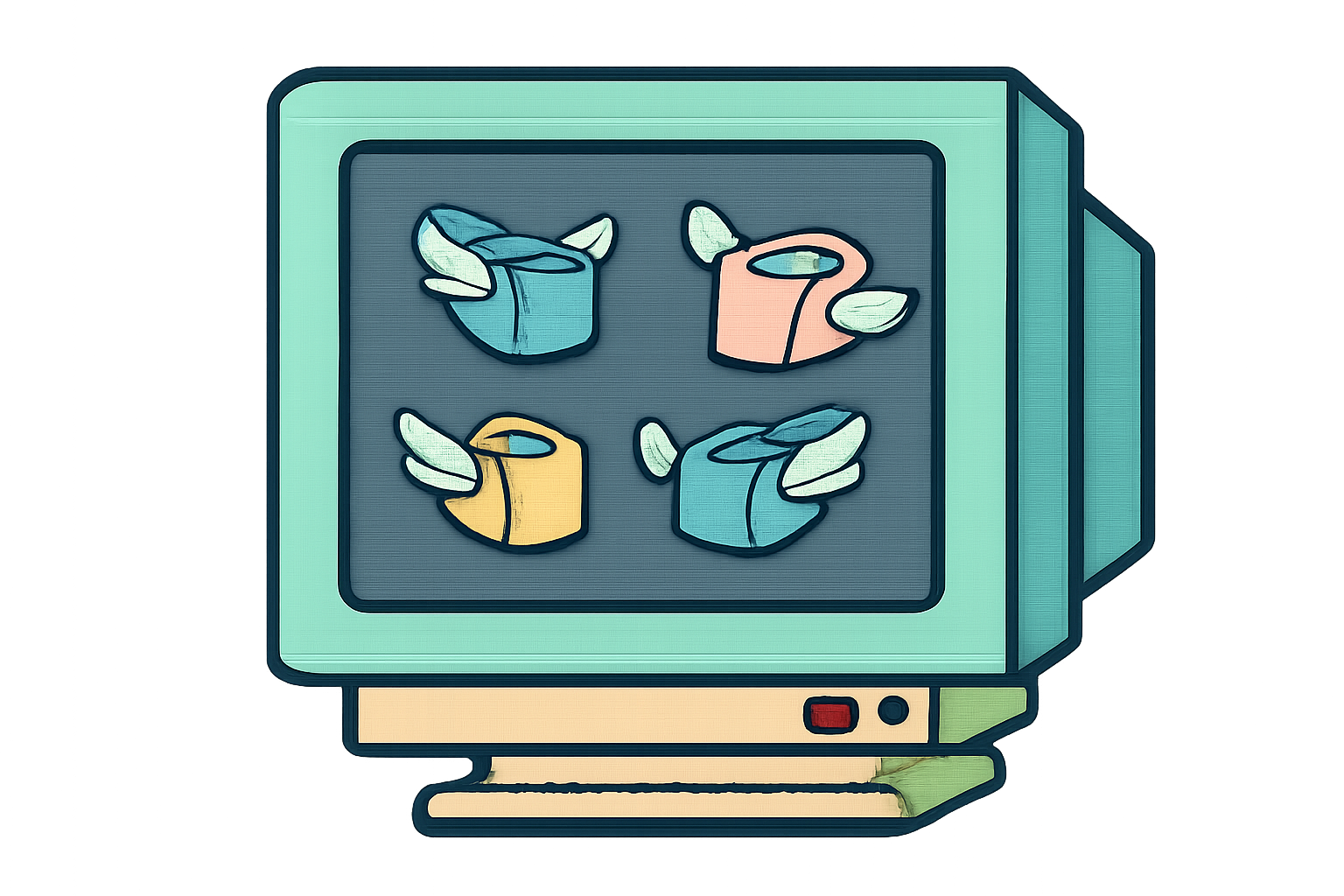
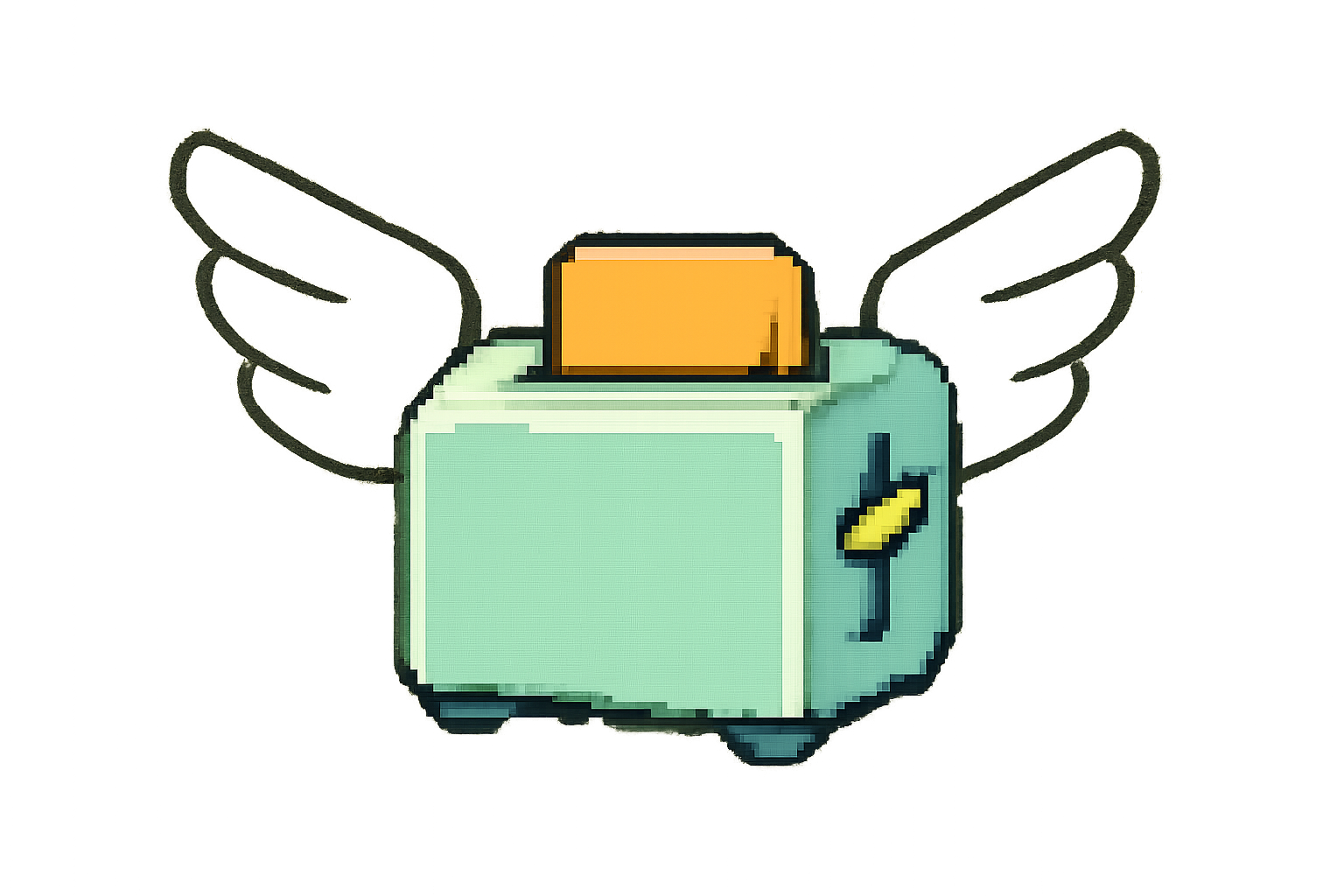
The toasters had wings. Little silver wings, flapping in an endless diagonal migration across a black void. Alongside them, slices of toast - plain, buttered, or burnt - tumbling through the same nothing. This was After Dark. This was what your computer did when you weren't looking. And for some reason, you could not stop looking.
I first saw the flying toasters on my dad's work computer. A Compaq Deskpro in a gray cubicle on the fourth floor of an insurance building in Columbus, Ohio. He'd brought me to the office on some school-off weekday - Presidents' Day, maybe, or one of those teacher in-service days nobody's parents could ever explain. The computer was doing nothing. And then the toasters came.
I watched them for five minutes. Maybe ten. My dad was on the phone. The toasters just kept going.
After Dark and the Golden Age of Doing Nothing
Berkeley Systems released After Dark in 1989, and by the early nineties it was everywhere. Every Mac in every office. Every beige Compaq and Packard Bell in every suburban home. The flying toasters were the headliner, but the whole collection was wild. There was one that filled the screen with falling autumn leaves. One that turned your monitor into a fishtank. One where little cartoon lemmings marched across the screen and fell off the edges.
These weren't utilities. They were entertainment. You installed After Dark the way you'd hang a poster. It said something about you. You picked your screensaver the way you picked your Trapper Keeper design - carefully, with full awareness that other people were going to see it.
And people did see it. At school, the computer lab had thirty Macs all running the same screensaver, usually something the teacher picked. At your friend's house, you'd walk past the family computer and catch whatever was playing. It was ambient. It was decorative. It was the lava lamp of the digital age.
The Windows Screensaver Cinematic Universe
Then there was Windows. Microsoft shipped Windows 3.1 and later Windows 95 with a handful of built-in screensavers that had no business being as mesmerizing as they were.
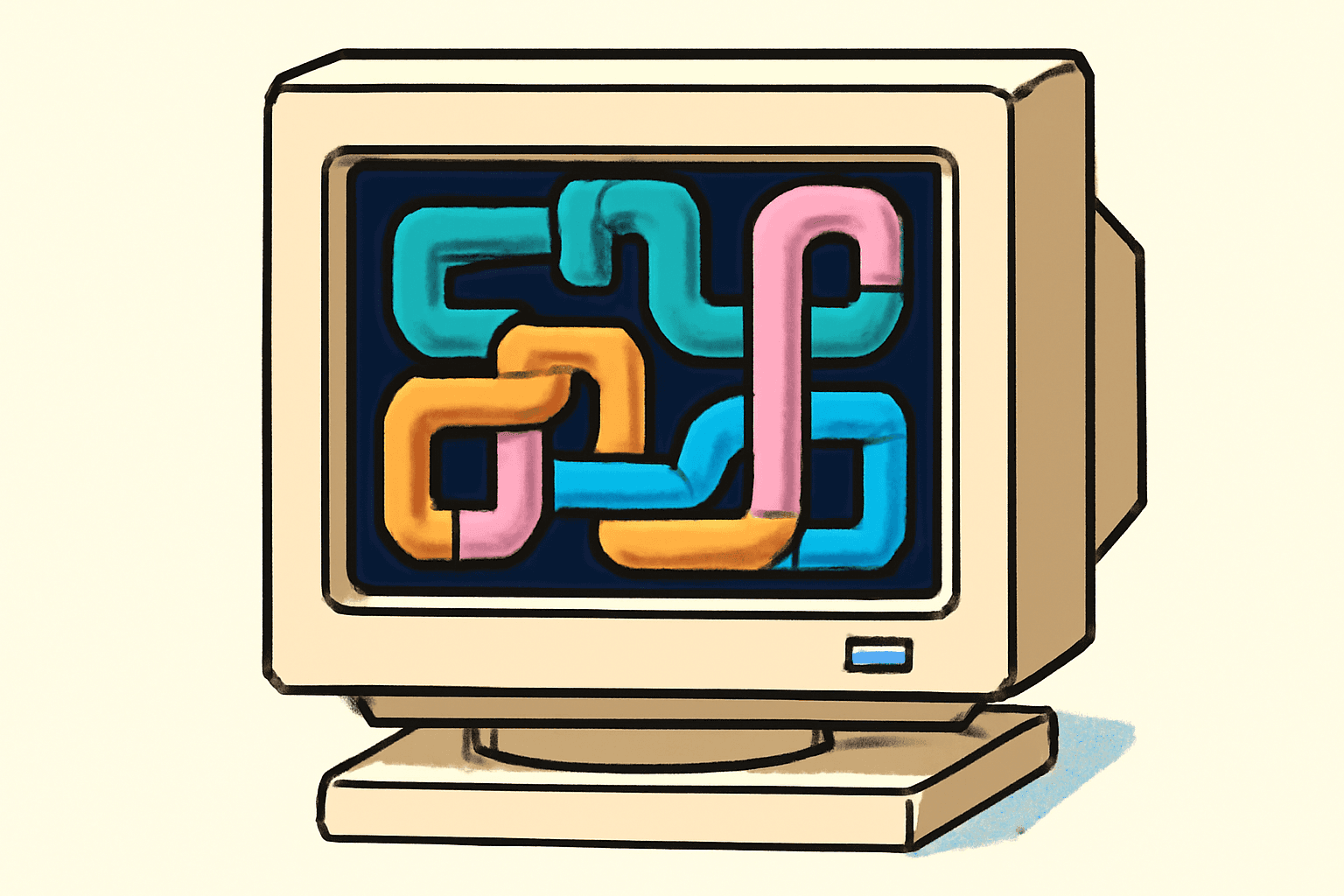
The 3D Pipes. You know the ones. An invisible architect building a plumbing system in real time, pipes branching and turning at right angles through empty three-dimensional space. Sometimes the joints were teapots - the Utah teapot, a deep cut from computer graphics history that none of us understood or questioned. You just watched. The pipes never went anywhere. They never connected to anything. They just built, endlessly, and you sat there at your dad's desk thinking this is kind of beautiful, actually.
The pipes never went anywhere. They never connected to anything. They just built, endlessly, and you sat there thinking this is kind of beautiful, actually.
The Starfield was the one that made you feel something. White dots streaming toward you from a central point, the illusion of warp speed, Star Trek on a budget of zero dollars. You could adjust the speed. Cranking it all the way up was mandatory. Cranking it all the way down was weirdly meditative, like a snowfall that never reached the ground.
The Maze was first-person. A slow, floating journey through a randomly generated labyrinth rendered in textures that looked like they were from a Doom level designed by an accountant. It was nothing. It was hypnotic. You couldn't look away because your brain kept insisting there was a destination. There wasn't. The maze was the point.
And the Scrolling Marquee. People put their names on these. Or jokes. Or warnings. "MIKE'S COMPUTER - DO NOT TOUCH" scrolling across the screen in 72-point green text on black, like a threat from the world's least intimidating hacker.
Johnny Castaway and the One-Man Show
If you know, you know.
Johnny Castaway was a screensaver released by Sierra in 1992, and it was unlike anything else. It wasn't a pattern or an animation loop. It was a story. A little cartoon man stranded on a tiny island, and he just - lived there. He fished. He built sandcastles. He tried to signal passing ships. Sometimes a mermaid showed up. Sometimes he found a treasure map. The gags changed with the seasons and holidays. On Christmas, he'd decorate a palm tree.
You couldn't interact with it. You just checked in, like it was a soap opera. You'd come back to the computer and try to catch what Johnny was doing now. People at offices would walk past a coworker's monitor and stop. "What's he doing? Is that a whale?" It had fans. A screensaver had fans.
It was a tiny, self-contained world running on a 486, and it might have been the first time a computer felt like it had an inner life. Like something was happening in there even when you weren't watching.
The Wait Was the Entertainment
Here's what's hard to explain to anyone who didn't live through it. Before the internet was fast - before the internet was even there for most of us - the computer was often just sitting. You were waiting for something to print. You were waiting for a file to save to a floppy. You were waiting for your parents to stop talking so you could leave the office. And the screensaver was what you had.
It was television for a screen that otherwise showed nothing but a C:> prompt or a Windows desktop with six icons on it. It was the thing that proved the computer was alive. The monitor would go dark, and then - motion. Color. A toaster with wings.
The screensaver was television for a screen that otherwise showed nothing but a C:> prompt and six icons.
We watched screensavers the way we watched fire. Not because they told us anything, but because they moved and we were human and movement is interesting. There was no second screen. There was no phone in your pocket. There was a Compaq in a cubicle and a ten-year-old sitting in a swivel chair with nothing else to do, and the pipes were building, and that was enough.
After Dark Games and the Merch Era
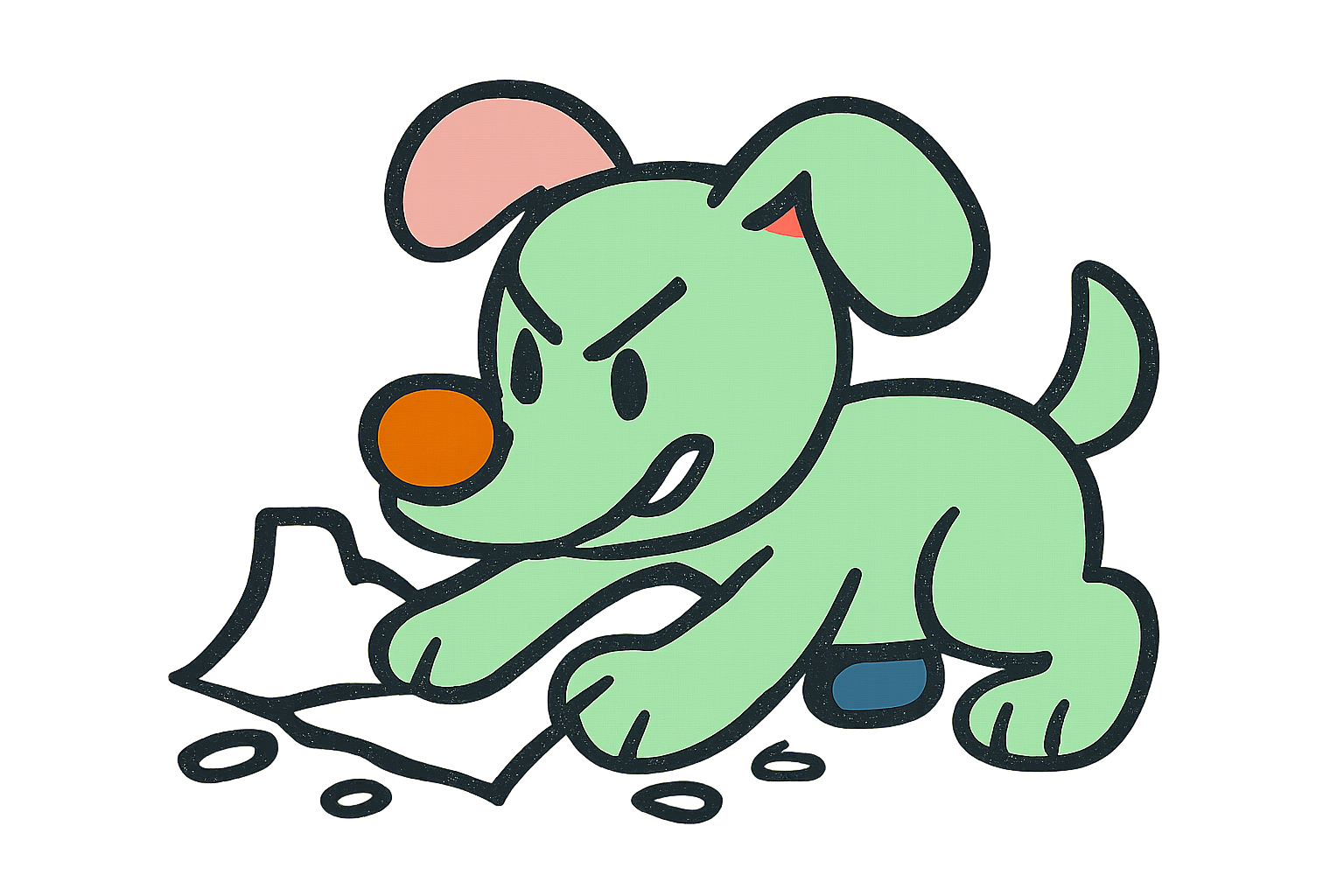
Berkeley Systems knew what they had. In 1998 they released After Dark Games, a collection of mini-games starring the screensaver characters. The flying toasters became a side-scrolling arcade game. Bad Dog got his own obstacle course. There was a Zeppelin builder. A rodent racing game called Rat Poker.
It was bizarre and wonderful and it cost like $19.99 at Babbage's and it proved something important: people were emotionally attached to these little animations. The toasters weren't just a tech demo. They were characters. They had merchandise potential. Flying toaster t-shirts existed. Flying toaster coffee mugs existed. A screensaver became a brand, and somehow that didn't feel crass. It felt earned.
The Screensaver Is Dead
Screensavers don't matter anymore. They can't. Modern monitors don't get burn-in. Your computer goes to sleep instead of performing for an empty room. The entire technical justification evaporated, and with it went the art.
Your laptop shows a lock screen now. A stock photo of a mountain. A clock. It's informational. It's efficient. It has never once made a ten-year-old stop and stare.
I think about those toasters sometimes. Not because they were good - they were silly, obviously, a nonsense image from a $30 software pack. But they were ours. They were the thing the computer did when it was alone, the little performance it put on for nobody, and we loved it for that. We chose it. We configured the speed and the number of toasters and whether the toast was buttered. We made it say something about us, even if what it said was just: this person thought flying toasters were funny.
The pipes are still building somewhere. I'm sure of it. In some forgotten office, on some machine nobody turned off, the pipes are turning corners and branching into nothing and connecting to nowhere. And they're beautiful. They were always beautiful. We just didn't have a word for it yet.