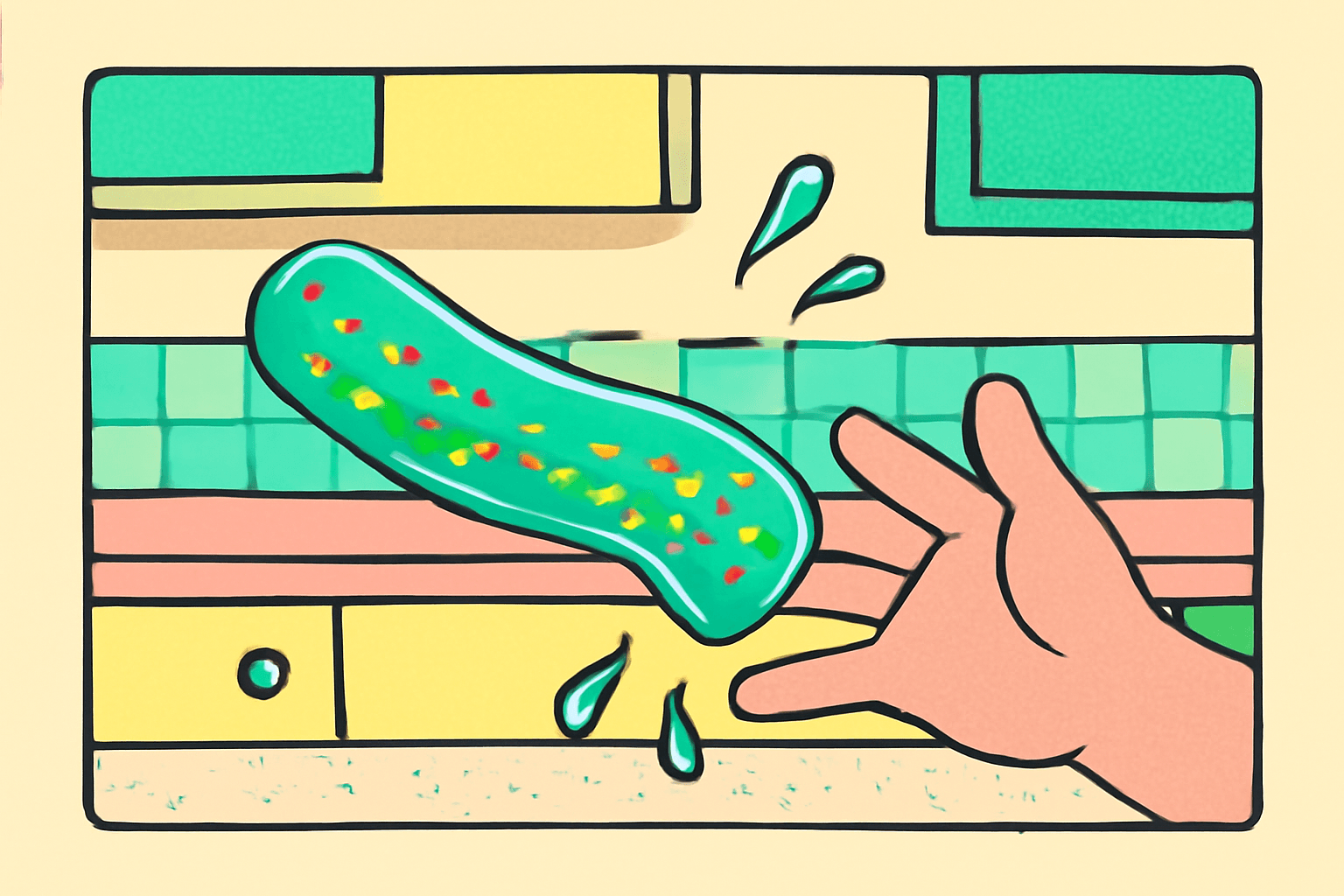
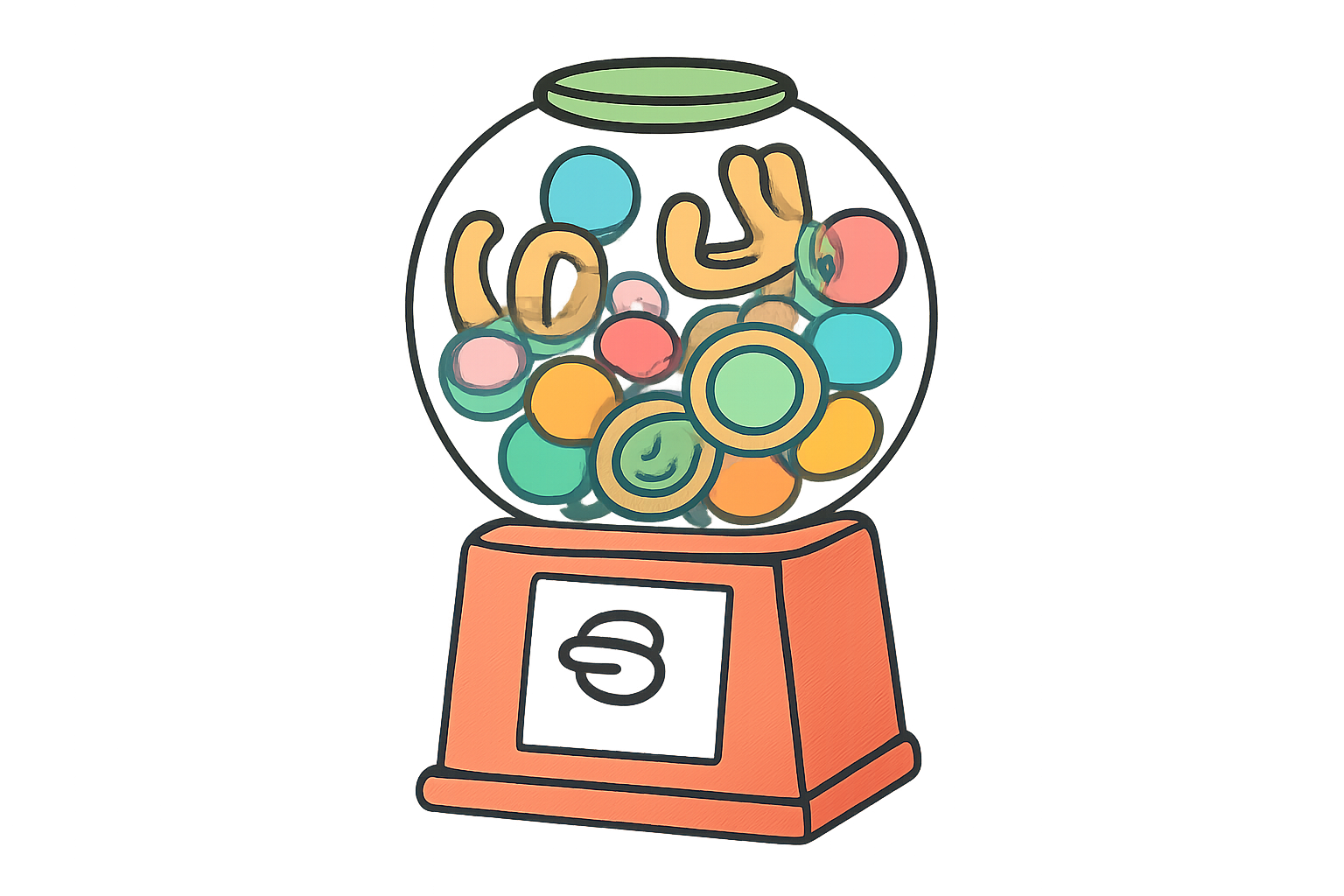
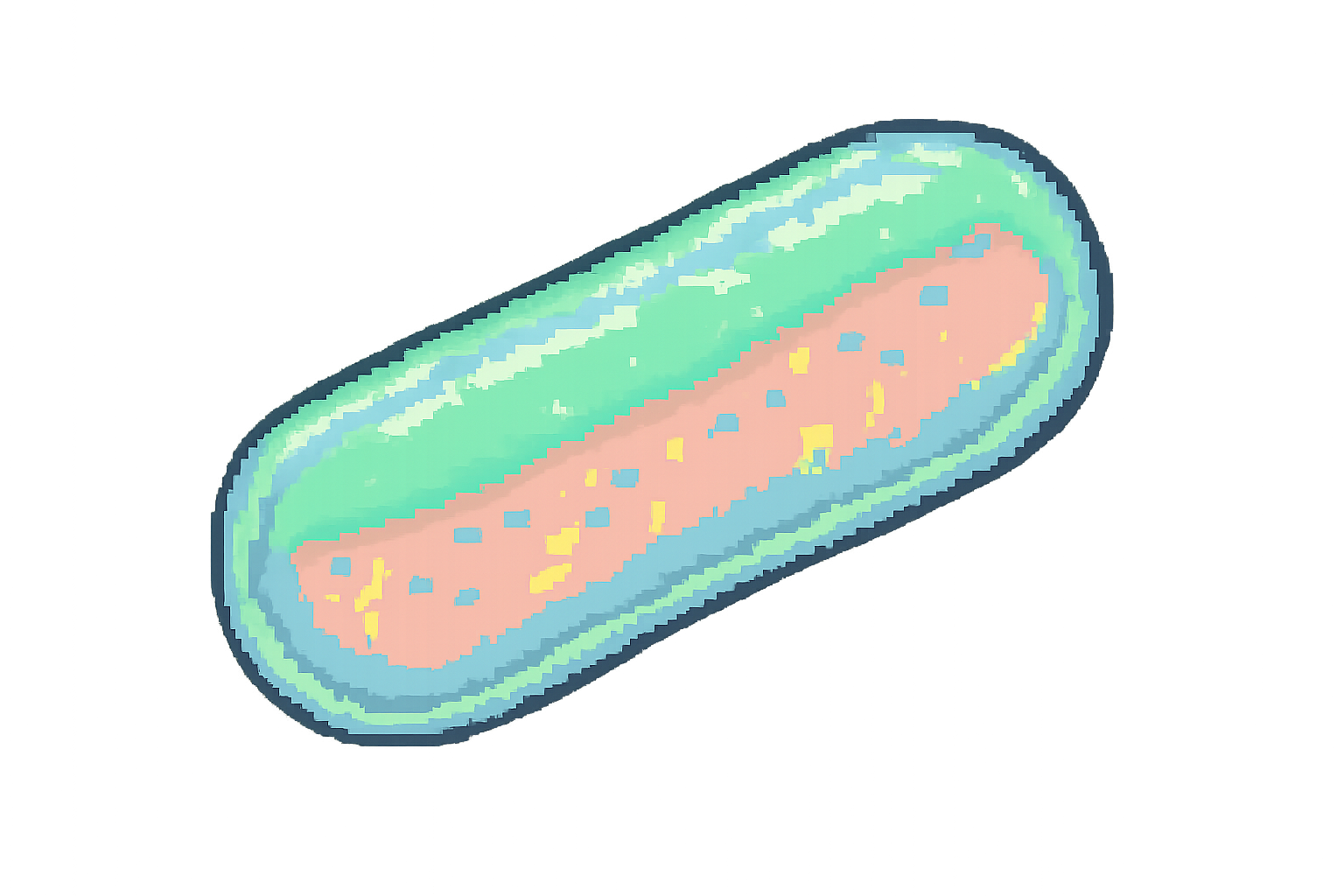
You'd see it in the machine and your whole body would lock up. Right there, behind the scratched plastic window, sitting in a little pile with the bouncy balls and the sticky hands and the plastic spider rings - the water wiggler. That tube of translucent rubber filled with some kind of liquid and maybe glitter, shaped like nothing, promising nothing, priced at fifty cents or a dollar depending on how upscale your particular vending machine situation was. You needed it. You didn't know why. You just needed it.
"Mom. Mom. Mom. I need a quarter. Two quarters. Please. Please."
She'd look at the machine. She'd look at you. She'd sigh the sigh of someone who'd been through this before and already knew how it ended. But she'd dig into her purse anyway, because you were at the grocery store exit or the pizza place lobby or the front of the Cracker Barrel, and sometimes it was easier to spend fifty cents than to have the argument.
The First Three Seconds
The quarter went in. The knob turned with that satisfying metallic crunch. The little metal door opened. And there it was, sitting in the chute like a gift from the universe. You picked it up and for exactly one second it felt like you'd won something.
Then you squeezed it.
And it shot out of your hand like a fish that had somewhere to be. Hit the floor. Rolled under a chair. You picked it up and tried again, gentler this time, and it squirted out the other direction. The thing was actively resisting you. It didn't want to be held. It was engineered - and I use that word loosely - to escape your grip every single time.
The water wiggler didn't want to be held. It was engineered - and I use that word loosely - to escape your grip every single time.
This was the entire toy. That was it. You squeezed, it slipped. You squeezed again, it slipped again. There was no level two. No advanced technique. No way to win. The water wiggler was a riddle with no answer, a game with no score, a purchase with no return policy.
And yet you kept squeezing. For about ninety seconds. Maybe two minutes if you were really committed. You'd try different angles. Two hands. One hand. Between your knees, which was a choice that looked exactly the way you're imagining it looked.
The Inevitable
Here's what nobody told you and what every kid discovered independently, like some grim rite of passage: the water wiggler had a lifespan of approximately one afternoon. Sometimes less. Because at some point - maybe you squeezed too hard, maybe the rubber was already thin from the factory, maybe the thing was simply destined to die - it punctured.
And then your hands were wet. And your shirt was wet. And whatever mysterious liquid had been inside the tube was now outside the tube and it was slippery and faintly chemical-smelling and you weren't totally sure it was safe.
The glitter, if there had been glitter, was now on everything. Your fingers. The car seat. The inside of your mom's purse where she'd told you not to put it. The water wiggler was dead and it had left evidence everywhere.
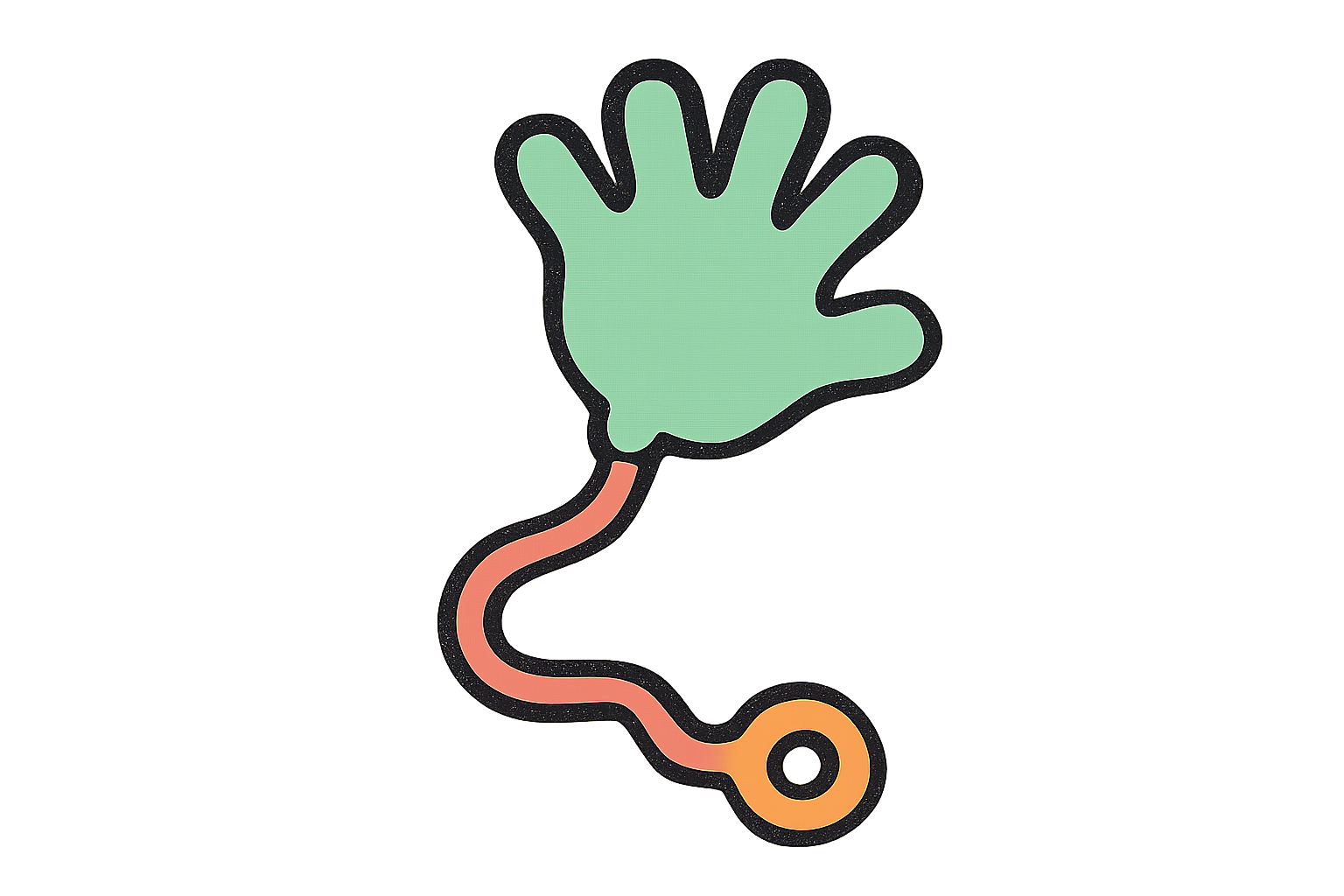

Nobody mourned the water wiggler. You just kind of looked at the deflated rubber tube and the puddle on the floor and accepted it. You didn't cry. You didn't ask for a replacement. You'd already moved on to thinking about the sticky hand in the other machine - the one shaped like a big splayed palm on a long rubber string that you could whip at walls and watch it stick. For a while. Before it picked up enough dust and crumbs to lose all adhesive properties and become just a weird rubbery thing on a string that your mom would eventually throw away.
The Broader Economy of Want
The quarter machine was just the gateway. The real danger zone was the gift shop.
Every museum, zoo, aquarium, national park visitor center, and rest stop in America had one. And every single one of them was designed to extract money from parents who'd already paid for parking and admission and lunch. The gift shop was the final boss of the family outing, positioned right at the exit so you had to walk through it, and it was full of things you suddenly couldn't live without.
The geode you could crack open yourself. The polished rock that came in a little velvet bag. The rubber snake. The snow globe of whatever city you were in, even if it didn't snow there. The pencil with your name on it - and if your name was common enough to be on a pencil, you felt seen, and if it wasn't, you felt a specific kind of erasure that honestly might have shaped your whole personality.
If your name was common enough to be on a pencil, you felt seen. If it wasn't, you felt a specific kind of erasure that might have shaped your whole personality.
The souvenir spoon. The keychain. The shot glass you were too young to understand but your dad bought anyway. The t-shirt that said "My parents went to [LOCATION] and all I got was this lousy t-shirt," which was funny exactly once and then you wore it to bed for three years.
You begged for all of it. Standing in front of the spinning rack of keychains, doing the math in your head - if I don't get the geode, can I get the keychain AND the magnet? - while your parents did their own math, which was less about the items and more about how much longer this trip could possibly last.
The Thing Nobody Says
Here's what I think about now. The water wiggler was never going to be good. It was never going to work. Everyone who ever bought one discovered the same thing in the same amount of time. And yet the quarter machines never ran out of them. Which means kids kept buying them, generation after generation, each one fully convinced that they would be the one to hold on.
That's not stupidity. That's something else.
I think the water wiggler was about the moment before. The moment of seeing it through the glass and wanting it. The turn of the knob. The anticipation of having something new in your hands, even if that something was a tube of mystery gel that would betray you in under two minutes. The want was the product. The toy was just the receipt.
The same was true of most of it, honestly. The sticky hands. The temporary tattoos. The bouncy balls. The souvenir shops and their racks of keychains with names on them. None of it was about the thing. It was about the choosing. The asking. The hoping your mom would say yes. The tiny negotiation of desire and budget that played out between a seven-year-old and a tired adult in every gift shop in America, a hundred times a summer, for decades.
The water wiggler wasn't a toy. It was practice. For wanting things that slip away the moment you think you have them. For learning that the thing you wanted and the thing you got were never quite the same. For discovering, again and again, that the best part was always the quarter in your hand and the knob that hadn't been turned yet.
I saw one in a machine at a laundromat last year. Same translucent tube. Same mystery liquid. Same glitter suspended inside like a tiny, ridiculous universe. I didn't buy it. But I stood there for a while, looking through the scratched plastic, remembering what it felt like to want something that badly and that pointlessly.
I almost put a quarter in. I think a part of me still believes I could hold on.