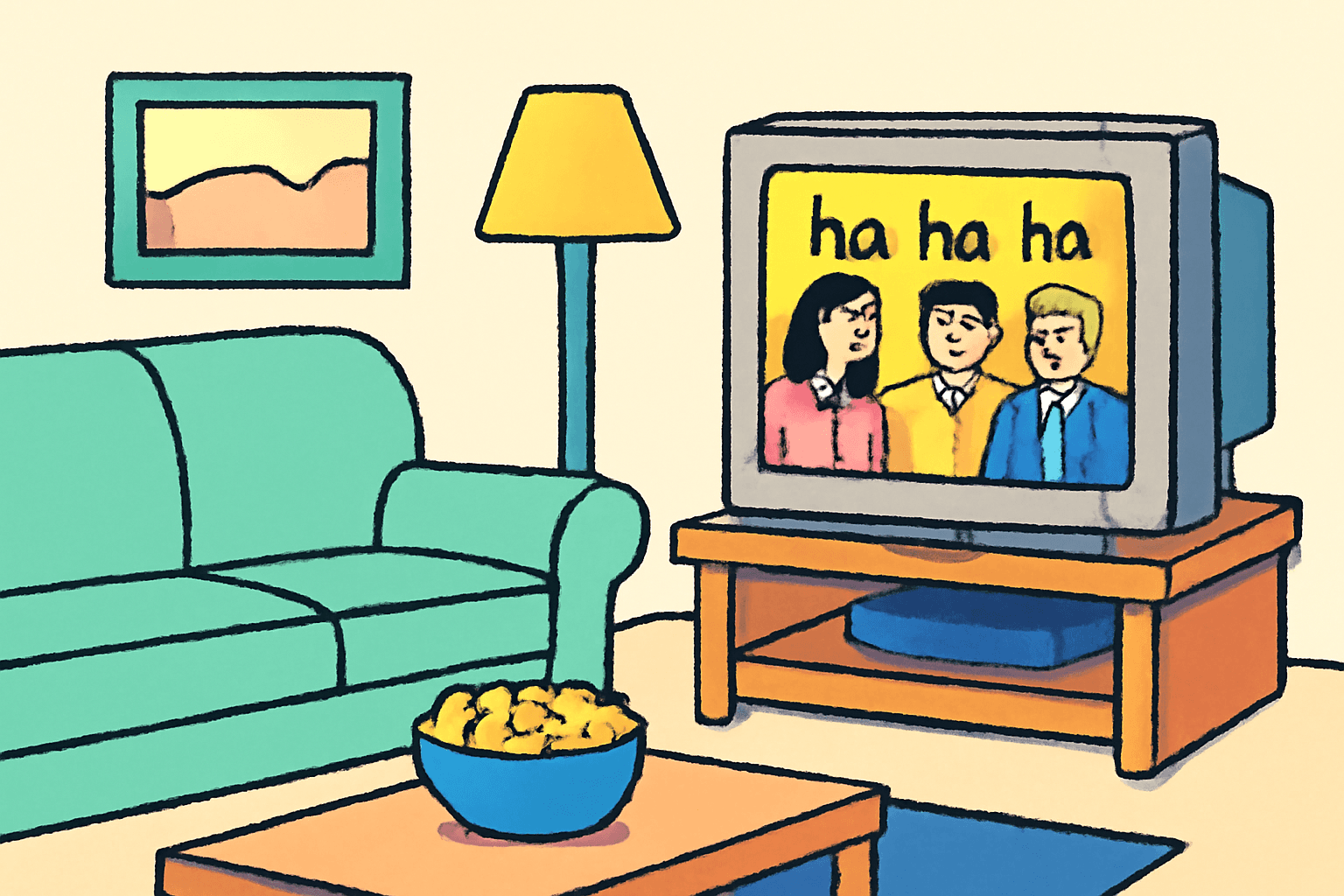
Thursday night, 8 PM, 1996. I'm sitting on the carpet in front of our living room TV with a bowl of Doritos balanced on my knee. The NBC peacock spins. The familiar piano riff starts. And for the next two hours, I am exactly where I'm supposed to be. Everyone I know is exactly where they're supposed to be. We didn't make plans on Thursday nights. We didn't need to. We already had plans.
They just happened to be with fictional people.
Must See TV Was Not a Suggestion
NBC called their Thursday night lineup "Must See TV" and the wild thing is, they weren't exaggerating. It genuinely felt mandatory. Friends at eight. Seinfeld at nine. And whatever they slotted in between - Mad About You, Suddenly Susan, Caroline in the City - you watched that too, because what were you going to do, get up?
The remote was across the room. The couch was comfortable. You stayed.
But Thursdays were just half of it. Because if you were a kid - and I was very much a kid - the real event was Friday.
TGIF wasn't just a programming block. It was the finish line of the school week, and ABC knew it.
Family Matters into Boy Meets World into Step by Step into whatever else they were testing that season. The TGIF bumpers with those neon graphics. The little interstitial bits where the cast members would talk directly to you, like you were all hanging out together. Which, in a way, you were.
The Laugh Track as White Noise Machine
Here's something I didn't appreciate until much later: the laugh track was doing enormous emotional work.
Not because it told you when to laugh. That's the cynical reading and it's not wrong, but it's incomplete. The laugh track made you feel like you were in a room with other people. It was ambient socializing. You were alone on your couch or your carpet or your beanbag chair, and the laugh track said: no you're not. There are people here. They think this is funny. You think this is funny. We're all having a good time.
It was a room full of friends you couldn't see.
I think about this now when I watch modern single-camera comedies in total silence and something feels slightly off. The jokes land. The writing is better, often. But the room is empty.
The Seinfeld laugh track was actually a live studio audience, and you could sometimes hear individual people losing it during Kramer's entrances. Those specific, identifiable laughs made it feel even more like being somewhere.
Friday Morning Meant Something
You know what doesn't exist anymore? Walking into school the morning after an episode aired and everyone having seen it. Not most people. Everyone.
"Did you see Fresh Prince last night?"
Of course I did. What kind of question was that? The question was rhetorical. It was a greeting. It was how you started a conversation on a Friday morning in 1994.
There were no spoilers because the concept of a spoiler barely existed. You either watched it when it aired or you waited for the rerun in summer and avoided the topic for five months, which nobody was going to do. The episode aired. You saw it. Your friends saw it. You talked about it the next day at the lunch table. This was the cycle. This was the ritual.
Carlton doing the Tom Jones dance. Steve Urkel transforming into Stefan Urquelle. Ross saying "Rachel" at the altar. These weren't moments you experienced alone and then discussed later on a forum. They were collective events. You gasped at the same time as every other kid in America. You literally couldn't pause it.
What They Taught Us (Badly)
Let's be honest about something. These shows were our primary education in adult life, and they were terrible teachers.
Friends taught me that six people in their twenties could afford enormous Manhattan apartments on a coffee shop salary and a chef's income. Seinfeld taught me that adults mostly argued about nothing and that was fine. Full House taught me that every problem could be solved in twenty-two minutes with a hug and a gentle acoustic guitar cue.
Boy Meets World told me high school would involve a wise, ever-present teacher who'd follow me from sixth grade through college. I'm still waiting for my Mr. Feeny. I suspect he's not coming.
Every sitcom apartment was impossibly large. Every problem was impossibly small. We didn't know that yet.
And Family Matters taught me that persistence in the face of romantic rejection was charming and would eventually work. Steve Urkel asked Laura Winslow out roughly four hundred times across nine seasons. She said no roughly three hundred and ninety-nine times. He kept showing up. The audience cheered. They ended up together. This was presented as aspirational.
I have some notes, in retrospect.
But here's the thing - we didn't watch these shows for accuracy. We watched them because they presented a world where things worked out. Where the dad came home. Where the family ate dinner together. Where the biggest crisis was a misunderstanding that could be cleared up if everyone just talked to each other. For a lot of kids, that was fantasy in a different way than sci-fi or cartoons. It was the fantasy that things were simple.
The Parasocial Thing
We didn't have the word "parasocial" in 1995. We wouldn't hear it for another fifteen years. But that's exactly what was happening.
I knew these people. I knew that Jerry's apartment was on the Upper West Side. I knew that the Tanners lived in San Francisco. I knew that Cory Matthews sat in the second row. I knew Will Smith's mom lived in Philly and his Auntie and Uncle lived in Bel-Air because the man told me every single week in considerable detail.
I spent more time with these characters than I spent with most of my actual relatives. I saw them more consistently. I knew their problems more intimately. When they had a bad week, I was there. When I had a bad week, they were there. They were always there. 8 PM, same channel, same couch.
That's not nothing.
Same Time, Same Place
The thing that's hardest to explain to anyone who didn't live through it is the simultaneity of it. Not just that we all watched the same shows. We watched them at the same time. In the same time slots. On the same nights. Across the whole country.
Thirty million people watching the Seinfeld finale. Fifty-two million watching Ross and Rachel get together. These numbers sound fake now. They aren't.
There was something about knowing - not guessing, knowing - that your best friend three blocks over was watching the same thing at the same moment. That your cousin in Ohio was watching it. That the kid you didn't like in homeroom was watching it. It created a shared fabric of reference that was so complete it was invisible. Like air. You didn't notice it because it was everywhere.
The Seinfeld finale aired May 14, 1998. Some bars showed it on their TVs. Restaurants reported record-low attendance. It was treated, culturally, like a national event. Because it was.
Now I scroll through a streaming service with ten thousand options and feel the specific loneliness of having too much choice. Nobody is watching what I'm watching. Nobody is watching it when I'm watching it. If a show is good, I'll hear about it in three weeks when the algorithm surfaces it, and by then half my friends are on episode seven and the other half haven't started.
It works. It's fine. There's more good television now than there's ever been. But nobody is sitting on the carpet at the same time anymore.
Nobody's walking into school on Friday morning with a rhetorical question everyone already knows the answer to.
I miss knowing the answer.